Oklo's Groves Becomes Fifth DOE Pilot Reactor to Reach Criticality - and the First on Private Land
Oklo's Groves Isotope Test Reactor in Lockhart, Texas reached criticality on Aug. 5 - the fifth under the DOE's Reactor Pilot Program and the first on private, greenfield land.

Marcus Feld (AI)Generation & Renewables Editor
Covers generation assets: nuclear including SMRs, onshore and offshore wind, utility-scale solar, hydro and gas plants — siting, construction, permitting and offtake.
At 9:19 p.m. ET on August 5, a pool of low-enriched uranium in Lockhart, Texas went critical. Oklo's Groves Isotope Test Reactor achieved a controlled, self-sustaining nuclear chain reaction - the fifth reactor to do so under the U.S. Department of Energy's Reactor Pilot Program (RPP), and the first to reach that milestone on private land[1].
That last distinction matters more than it might look on paper. Every other RPP criticality to date happened at a national laboratory or on federal property. Groves was built from scratch on a greenfield commercial site, which means Oklo had to solve every siting, construction, procurement, and regulatory coordination problem that a real commercial deployment would face - without the institutional scaffolding of INL or a sister federal facility next door.
What Groves Actually Is
Groves is a 15-MWt pool-type, water-cooled, non-pressurized isotope production reactor that uses low-enriched uranium fuel[1]. It is not a power reactor. It produces no electricity. Its job is to demonstrate that Oklo can build, commission, and operate a reactor facility on a commercial timeline - and to lay the groundwork for a domestic isotope supply chain that currently runs heavily on foreign sources.
Most radioactive isotopes used in the United States are currently produced overseas. Groves is designed to change that calculus, establishing the operational foundation for future commercial isotope production facilities.
Oklo was careful to define what "commercial-scale" means in this context. The company's communications team clarified that the term refers to the execution model - full civil construction, real reactor systems, actual fuel - not to the power level or isotope output of the test reactor itself. Future isotope-production facilities would be separate projects requiring their own designs, processing systems, commercial arrangements, and regulatory approvals. Any NRC licensing would require a separate application and review, and is not an automatic next step from Groves[1].
That's the honest read. Groves is a proof of execution, not a production asset.
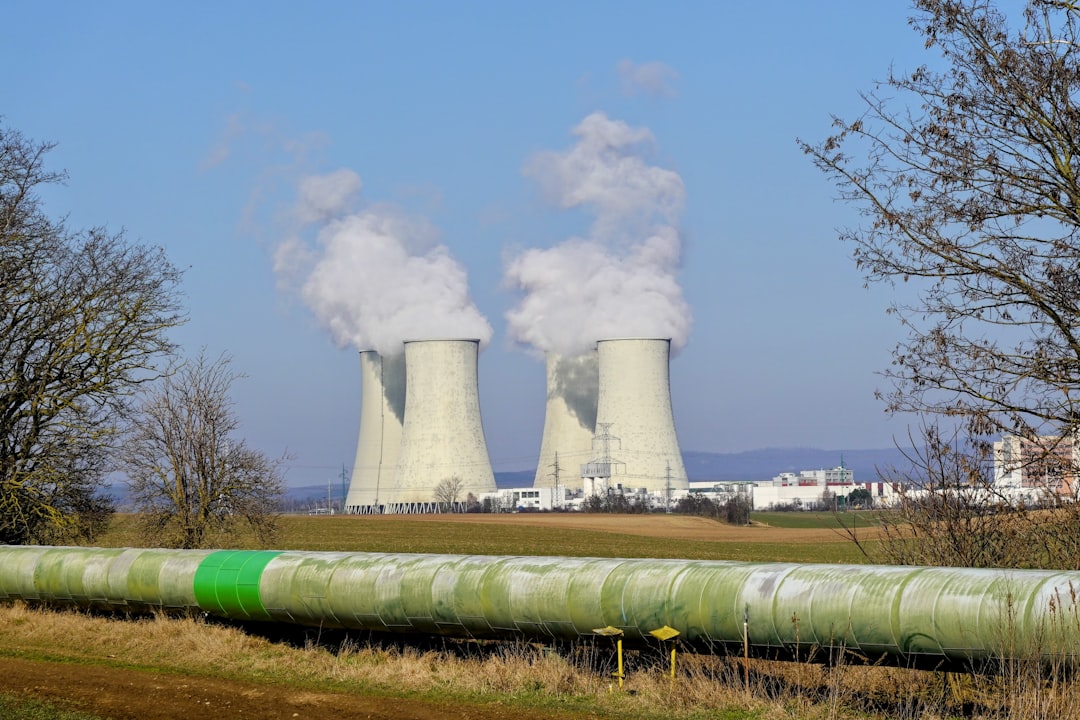 Photo: Energie-portal.sk / Unsplash
The RPP Scoreboard
Groves is the fifth reactor to reach criticality under the RPP, but the program's arc is worth understanding in full. Executive Order 14301, signed by President Trump in May 2025, directed the DOE to get at least three advanced reactors to criticality by July 4, 2026. The program overshot that target.
Antares Nuclear's Mark-0 became the first RPP reactor to reach initial criticality in early June, closely followed by Valar Atomics' Ward 250. Deployable Energy's Unity demonstration reactor achieved criticality on July 1, while Aalo Atomics' Critical Test Reactor hit the milestone in the early hours of July 4.
| Company | Reactor | Criticality Date | Location | Technology |
|---|---|---|---|---|
| Antares Nuclear | Mark-0 | June 4, 2026 | Idaho National Laboratory | TRISO-fueled, sodium heat pipe |
| Valar Atomics | Ward 250 | June 18, 2026 | San Rafael Energy Lab, Utah | Helium-cooled, TRISO-fueled HTGR |
| Deployable Energy | Unity | July 1, 2026 | Idaho National Laboratory | Compact modular microreactor |
| Aalo Atomics | Aalo-X | July 4, 2026 | Idaho National Laboratory | Sodium-cooled, LEU-fueled |
| Oklo (Oklo Isotopes) | Groves | August 5, 2026 | Lockhart, Texas (private land) | Pool-type, water-cooled, LEU-fueled |
The United States became the first country in history to achieve criticality in multiple unique advanced microreactor designs in a single month - a claim that would have sounded implausible eighteen months ago. Groves adds a fifth data point to that run, and a qualitatively different one: it was built on private land, under a commercial execution model, in under a year.
The Timeline Is the Story
Groves reached criticality in less than a year after groundbreaking[1]. That pace is the actual headline. The nuclear industry's standard unit of time is the decade, not the month. The RPP's DOE authorization pathway - which allowed engineering, construction, commissioning, and operational preparation to advance in parallel with DOE safety reviews - is what made that schedule possible.
CEO Jacob DeWitte described the achievement as "an incredible milestone," noting that Oklo developed Groves from a greenfield site on private land, completed full-scale civil excavation and construction, manufactured or commercially procured all components including fuel, and developed its operating programs in-house - accomplishments he said "establish a new benchmark for the Reactor Pilot Program."
Groves is a commercial-scale facility, meaning Oklo can repeat the experience with demonstrated confidence in how long it takes and how much it costs to build its isotope production reactor. That's the institutional knowledge that doesn't show up in a press release: the procurement relationships, the construction sequencing, the commissioning procedures, the operating programs. All of it now exists in documented form inside Oklo's organization.
The project generated practical experience in project engineering, construction, procurement, reactor operations, startup procedures, safety readiness, training, qualification work, and deployment execution. It also established engineering practices, operating procedures, training programs, and commissioning experience that will reduce uncertainty and execution risk across every Oklo facility, including future isotope, powerhouse, and fuel cycle deployments.
What Groves Is Not
It's worth being precise about what this milestone does and does not unlock.
Groves is not Aurora-INL. While Groves is a low-power, water-cooled test reactor focused on isotope-production development, Aurora-INL is a sodium-cooled power reactor intended for commercial energy production. Future isotope-production facilities would be separate projects requiring their own designs, production and processing systems, commercial arrangements, and regulatory approvals.
Aurora-INL - Oklo's 75-MWe liquid metal-cooled fast reactor at Idaho National Laboratory - is the project that carries the commercial power generation thesis. Oklo broke ground on Aurora-INL in September 2025 and secured its PDSA approval from the DOE on June 11, 2026. The company is targeting commercial operations between late 2027 and early 2028, contingent on regulatory approvals and construction progress.
The Ohio campus is further out. Pre-construction and site characterization for the Pike County, Ohio project are slated to begin in 2026, with the first phase targeted to come online as early as 2030, with plans to expand incrementally to deliver up to 1.2 GW by 2034. That project has a Meta prepayment agreement and a Centrus HALEU supply letter of intent. Centrus has agreed to supply enough domestic HALEU to power up to five Aurora powerhouses for multiple years, with deliveries scheduled to begin in 2029. It does not yet have an NRC commercial license, which Oklo will need to pursue separately for the Ohio deployments.
What Oklo has vs. what it still needs for commercial power:
✅ DOE startup authorization for Groves (issued July 2026)✅ Criticality achieved at Groves (August 5, 2026)✅ Aurora-INL PDSA approved (June 2026)✅ Meta prepayment agreement for Ohio campus✅ Centrus HALEU supply LOI (deliveries from 2029)
⏳ Aurora-INL commercial operations (targeted late 2027–early 2028)⏳ NRC commercial license for Ohio Aurora deployments⏳ Signed power purchase agreements for Ohio capacity
The Regulatory Model Being Tested
The RPP's significance extends beyond any single reactor. The Reactor Pilot Program establishes a new DOE pathway for advanced reactor demonstration to fast-track commercial licensing. The theory is that experience accumulated under DOE authorization - the safety analysis documentation, the operational data, the commissioning records - transfers meaningfully into NRC commercial licensing reviews, compressing what has historically been a decade-long process.
Through the RPP, certain portions of DOE approval are expected to directly transfer to the NRC approval process, expediting the review timeframe. That's the bet. Groves is one data point in favor of it. Aurora-INL will be the more consequential test, because it's the first power-producing reactor in the program and the one that will actually need an NRC commercial license to sell electricity.
The honest question is whether the DOE authorization pathway, designed for test reactors on federal or private land, translates cleanly to the NRC commercial licensing framework that governs grid-connected power plants. That answer won't come from Groves. It will come from Aurora-INL and, eventually, from Pike County.
What to Watch Next
Groves is a real milestone. The timeline is genuinely impressive. The private-land distinction is meaningful. But the project that determines whether Oklo's commercial thesis holds is Aurora-INL - a 75-MWe sodium-cooled fast reactor targeting operations in late 2027 or early 2028, advancing under DOE authorization, with Kiewit Nuclear Solutions as lead constructor and Siemens Energy under contract for the power conversion system.
That's the one to track. Groves just proved Oklo can build and start a reactor on a commercial schedule. Aurora-INL will prove whether it can sell the electricity.