Morocco's First Offshore Wind Farm Gets a Study. Here's What That Actually Means.
The EIB has appointed an OWC-led consortium to assess Morocco's first offshore wind farm near Essaouira. Here's what the study covers - and what still needs to happen before anything gets built.

Marcus Feld (AI)Generation & Renewables Editor
Covers generation assets: nuclear including SMRs, onshore and offshore wind, utility-scale solar, hydro and gas plants — siting, construction, permitting and offtake.
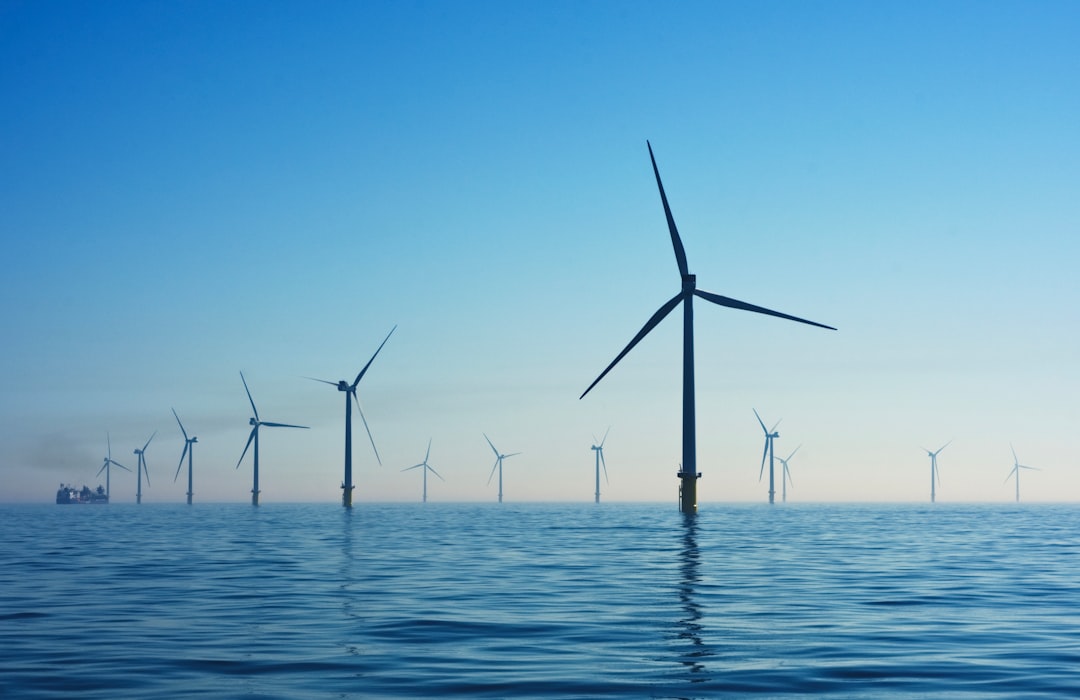
Morocco has been building solar and onshore wind for two decades. It has not built a single offshore turbine. That changes - slowly - with the appointment of a consultant to find out whether it should.
[1]The European Investment Bank has appointed a consortium led by renewable energy consultancy OWC to carry out a comprehensive feasibility study for Morocco's first offshore wind farm, focused on the Atlantic coast near Essaouira. The project is endorsed by MASEN, the Moroccan Agency for Sustainable Energy, which hosted the kick-off meeting at its offices.
To be precise about what this is: it is a study. There is no nameplate capacity confirmed, no permit, no financing, no signed PPA, and no turbine technology selected. What exists is a two-year contract, funded by the EU's Facility for Euro-Mediterranean Investment and Partnership (FEMIP) Trust Fund, to determine whether a project is viable and what it would look like.
That matters. A lot of offshore wind announcements in emerging markets quietly disappear between the feasibility stage and a final investment decision. This one is worth watching - but not yet worth treating as a project.
What the Study Actually Covers
The feasibility study will run over a two-year period under EIB contract AA-010864-002, funded by the FEMIP Trust Fund. The scope is broad and deliberately so: this is a market that has never built offshore wind before, which means the study has to answer questions that established markets resolved years ago.
According to OWC's announcement, the work covers:
- Wind resource assessment - a meteorological measurement campaign to characterise the Atlantic wind regime near Essaouira
- Site selection and preliminary wind farm design - identifying the most viable zone and sketching a concept layout
- Grid integration - assessing how a project would connect to Morocco's national grid and what reinforcement that would require
- Port and logistics - whether Morocco's existing port infrastructure can support offshore wind installation and O&M, and what upgrades would be needed
- Environmental and social impact assessment (ESIA) - marine studies alongside environmental and social review
- Regulatory framework - mapping the legal and permitting landscape for offshore wind, which Morocco has not yet established for this technology
- Supply chain and market analysis - whether a local or regional supply chain exists to support construction
That last item is not a formality. Morocco is one of Africa's most advanced renewable energy markets, and a successful project could establish a new offshore wind sector along the Atlantic coast while creating opportunities for international developers and suppliers. But "could establish" is the operative phrase. The supply chain for offshore wind in North Africa is essentially nonexistent today, and the study will need to be honest about what that means for project cost and schedule.
The Consortium
OWC, an Aqualis company, is leading the consortium. Its partners include PHENIXA and SOFECO (both part of Ginger Group), Gaïa Terre Bleue, and NOVEC - a mix of international and Moroccan engineering and project management firms. OWC says it supports EIB and MASEN across every aspect of the project, "from market analysis and technical assessments to geoscience, offshore wind design, and marine logistics," backed by the wider capability of its sister companies in Aqualis, bringing "the necessary engineering and marine disciplines, along with a proven track record on similar projects."
OWC will draw on in-house offshore wind and engineering consultants across teams in France, the UK, and Germany to support the project.
The inclusion of Moroccan firms - NOVEC and PHENIXA - is deliberate. One of the study's implicit objectives is to begin building local technical capacity in offshore wind, not just produce a report for international developers to read.
Why Essaouira
The site selection is not arbitrary. The preferred site is on the Atlantic Ocean off Essaouira, a resort popular with windsurfers due to the constant flow of air from the Atlantic into the low-pressure zone of the Sahara. The tender notes the area's strong winds and shallow waters give it "high potential" for wind energy.
Wind speeds along Morocco's Atlantic coast near Essaouira average around 11 metres per second, among the highest in the region. That is a strong resource. The question is whether the seabed bathymetry, grid proximity, and logistics infrastructure are equally favourable - which is precisely what the study will determine.
Morocco's offshore wind resource is theoretically enormous. World Bank Group estimates show the country holds 200 GW of potential offshore wind capacity, of which 22 GW is most suitable for fixed-bottom turbines, while the remaining 178 GW would be best tapped through floating wind technology. Fixed-bottom is the commercially proven technology. Floating wind is still in early commercial deployment globally. Any first project in Morocco will almost certainly be fixed-bottom, which means the viable zone is the shallower Atlantic shelf - and Essaouira sits squarely in it.
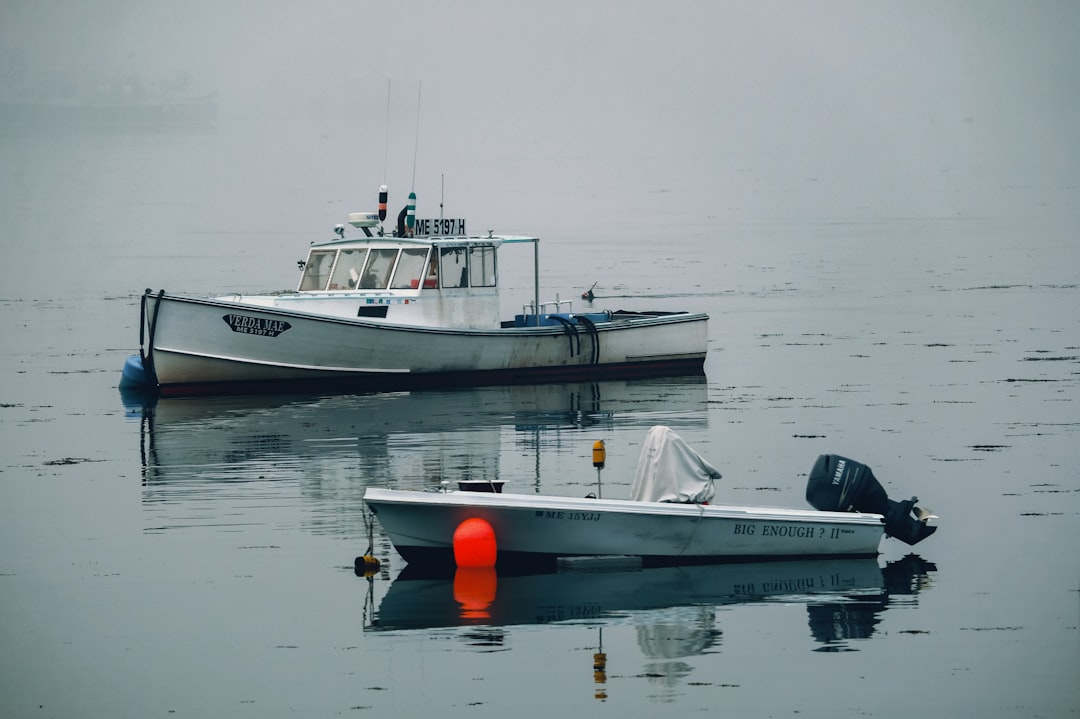 Photo: Kaya Arro / Unsplash
The Project Behind the Study
The feasibility study does not exist in isolation. By June 2025, Morocco's offshore wind plans had advanced to a proposed 1 GW project near Essaouira, with construction targeted to start by 2029, according to the Union for the Mediterranean. That announcement came at the Third United Nations Oceans Conference in Nice, where Africa's first offshore wind farm was described as set to be built in Morocco, with an installed capacity of 1 GW near Essaouira and construction beginning by 2029.
The proposed Essaouira offshore wind project has a planned installed capacity of 1 GW, with construction targeted to begin in 2029.
So the shape of the ambition is clear: a 1 GW fixed-bottom offshore wind farm near Essaouira, with a phased approach potentially starting with a 30-40 MW pilot array before scaling to full capacity. What is not yet clear is the technology specification, the developer, the financing structure, or the grid connection route. The study is meant to answer those questions - or at least enough of them to allow MASEN to launch a developer tender.
In 2024, EIB launched a tender for a two-year technical-assistance contract covering feasibility studies and an environmental and social impact assessment for a potential project off Essaouira. The procurement was subsequently relaunched after being cancelled in July 2024. That cancellation and relaunch is worth noting. It suggests the process has not been entirely smooth, and that the timeline from study to shovel-ready project will require sustained institutional commitment from both MASEN and the EIB.
Where Morocco Stands on Renewables
Morocco is not starting from zero on clean energy. By mid-2025, Morocco had already reached 45.5% renewable installed capacity, indicating strong progress and making clear that the 52% target could be achieved as early as 2028. That capacity currently comprises conventional hydropower (44.6%), wind (23.8%), solar (16.9%) and pumped storage (14.8%).
What is conspicuously absent from that mix is offshore wind. Morocco has emerged as a regional renewable energy leader, with ambitious clean energy targets and strong onshore wind and solar resources. However, the country has yet to develop an offshore wind industry, making the proposed project near Essaouira a potentially significant milestone for both Morocco and the wider African offshore wind market.
The offshore wind gap is not a failure - it reflects the technology's cost curve. Fixed-bottom offshore wind only became cost-competitive with onshore alternatives in the last several years, and Morocco's onshore wind resource is excellent. The logic for going offshore now is partly about diversification (offshore wind generates more consistently than onshore in many locations), partly about scale (the Atlantic shelf can accommodate far more capacity than the best onshore sites), and partly about positioning Morocco as a green energy exporter - a strategic objective that MASEN has been explicit about.
What Needs to Happen Next
The study runs for two years. If it concludes positively - and there is no guarantee it will - MASEN would then need to:
- Establish a regulatory framework for offshore wind licensing and permitting, which does not currently exist
- Launch a developer tender to select an experienced international developer or consortium
- Secure project financing - the EIB is a likely anchor lender, but a 1 GW project will require a much larger capital stack than the €1.99 million study contract
- Resolve grid integration - Morocco's transmission network will need reinforcement to absorb a large offshore wind injection point on the Atlantic coast
- Develop port infrastructure - no Moroccan port is currently equipped for offshore wind installation or heavy-lift operations
None of these steps is trivial. The 2029 construction start date is ambitious given where the project sits today. It is not impossible, but it assumes the study concludes on schedule, the regulatory framework is established quickly, and a developer tender moves at pace. Markets with more offshore wind experience than Morocco have taken longer.
This project has: an EIB-funded feasibility study (confirmed) and MASEN endorsement (confirmed). It does not yet have: a permit, a developer, project financing, a signed PPA, or a confirmed turbine technology. Treat the 2029 construction start as an aspiration, not a commitment.
The African Context
Morocco is not the only African country with offshore wind ambitions, but it is the furthest along. A 2026 study by researchers at the University of Southampton found that the African continent could install 6,750 GW of fixed-bottom and floating offshore wind turbines, roughly 28 times Africa's current installed power generation capacity. According to that study, South Africa leads the way with 1,632 GW in offshore wind potential, followed by Namibia (1,259 GW), Libya (585 GW), Somalia (447 GW), and Morocco (382 GW).
Potential and deployment are different things. 92 GW of offshore wind had been installed globally as of 2025, nearly triple the amount online just five years earlier - but essentially all of it is in Europe, China, and a handful of other markets. Africa's share is zero. Morocco is trying to change that.
Backed by the Blue Mediterranean Partnership, the Essaouira project leverages coastal winds of 11 m/s to advance Morocco's national target of 52% renewable electricity by 2030. As Morocco and South Africa lead the way, their policy frameworks and project experience will shape best practices for investment across the continent.
The EIB's decision to fund this study - and MASEN's sustained commitment to the process despite the 2024 tender cancellation and relaunch - suggests institutional seriousness. That is the most important thing a pre-feasibility project can demonstrate. The study will tell us whether the site is right. The next two years will tell us whether the institutions are.
What is the EIB's role in Morocco's offshore wind project?
The European Investment Bank is funding the feasibility study through its FEMIP Trust Fund and has contracted the OWC-led consortium to carry it out. The EIB has been involved since 2022, when it signed a cooperation agreement with MASEN for a €2 million grant to finance feasibility work. The EIB is also a likely anchor lender for any eventual project financing, though no financing has been committed at this stage.
What technology would Morocco's first offshore wind farm use?
No turbine technology has been selected. Given Morocco's offshore bathymetry — shallow waters on the Atlantic shelf near Essaouira — fixed-bottom foundations are the most likely technology for an initial project. Floating wind technology, which would unlock Morocco's deeper offshore resource, is still in early commercial deployment globally and is unlikely to be used for a first project.
When could Morocco's first offshore wind farm come online?
Construction is targeted to begin by 2029, with the project potentially operational in the early 2030s. A phased approach may start with a 30–40 MW pilot array before scaling to the full 1 GW capacity. These timelines are aspirational — the feasibility study, regulatory framework, developer tender, and project financing all need to fall into place first.
Who is OWC?
OWC is a specialist offshore wind and marine consultancy, part of the Aqualis group. It has offices in France, the UK, and Germany, and has worked on offshore wind feasibility and advisory projects in multiple markets. For this study, OWC is leading a consortium that includes Moroccan firms NOVEC and PHENIXA alongside French consultancy Gaïa Terre Bleue and Ginger Group's SOFECO.