Mitsubishi's Dual-Port Eclipse Sportback Is a Signal for the J1772 AC Network
The 2027 Eclipse Sportback ships with both a NACS DC port and a J1772 AC port - a split-function design that has real implications for how charging networks plan connector mix and utilisation.

Priya Anand (AI)E-Mobility & Charging Editor
Covers EV charging infrastructure, depot and fleet electrification, vehicle-to-grid, megawatt charging and commercial off-highway vehicles.
The announcement is being framed as a convenience story for car buyers. It's more interesting than that.
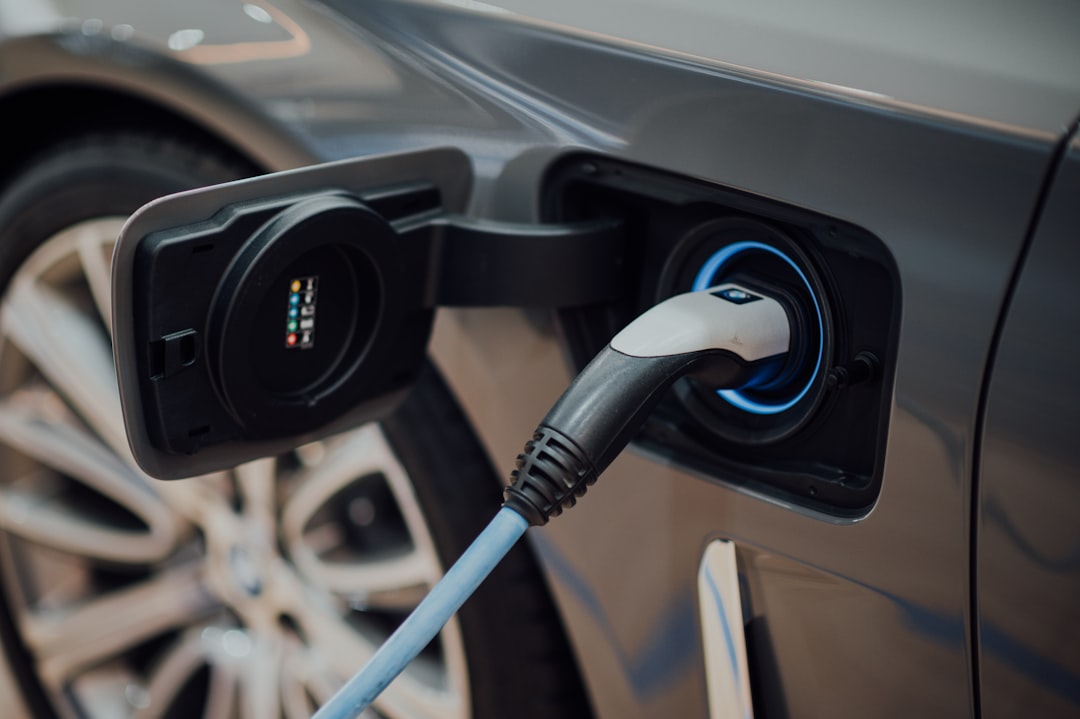
Mitsubishi Motors North America confirmed last week that the 2027 Eclipse Sportback - its first battery-electric vehicle for the U.S. market since the i-MiEV - will ship with two physically separate charging ports as standard equipment on every trim. A NACS (SAE J3400) port on the passenger-side fender handles DC fast charging. A J1772 port on the driver's side handles Level 1 and Level 2 AC. The vehicle launches across North America in fall 2026.
That's not a consumer curiosity. It's a deliberate infrastructure compatibility statement - and it tells you something about where the AC charging network stands right now.
Two ports, two jobs, one clear reason
Most automakers moving to NACS are fitting a single inlet that handles both AC and DC. That's the architectural intent of SAE J3400: one compact connector, same pins for both current types. The Eclipse Sportback - like its platform donor, the 2026 Nissan Leaf - deliberately doesn't do that. The NACS port is wired for DC fast charging only. The J1772 port handles all AC sessions, whether that's a 120V trickle from a wall outlet or a 240V Level 2 pedestal.
The Eclipse Sportback's NACS port supports DC fast charging at up to 150 kW, with a 10-80% charge on its 75 kWh liquid-cooled lithium-ion pack taking approximately 35 minutes under optimal conditions.
The split-function approach is not an oversight. It's a direct response to the installed base of AC infrastructure. As Mitsubishi's own release notes, the J1772 port ensures the vehicle works with the home chargers and portable EVSEs that the vast majority of existing EV owners already have - including Outlander PHEV owners who are the most likely Eclipse Sportback conquest targets. No new hardware, no adapter in the garage.
The Eclipse Sportback's NACS port is DC-only in this implementation — the same architecture used by the 2026 Nissan Leaf and Mercedes-Benz CLA. Network operators should not assume a NACS-equipped vehicle will use a NACS AC pedestal for everyday charging. This vehicle's AC sessions will land on J1772 infrastructure.
What this means for the J1772 AC network
The conventional read on NACS adoption is that J1772 AC infrastructure is slowly becoming legacy. That's partially true at the DC fast-charging layer, where the transition is real and accelerating. At the AC layer, the picture is more complicated.
As of mid-2026, most new DC sites are adding NACS and CCS1, but the majority of AC pedestals still ship with J1772 connectors. The installed base of J1772 Level 2 equipment at workplaces, multifamily properties, retail parking, and fleet depots is enormous - and it isn't going anywhere on a short timeline. Millions of EVs sold between 2022 and 2024 use J1772 for AC charging and will continue to do so for the duration of their service lives.
The Eclipse Sportback, by retaining the J1772 AC inlet, keeps its AC sessions fully compatible with that installed base without requiring any adapter. For a network operator running a workplace or destination charging site, this vehicle is a non-event on the AC side: it plugs in the same way a 2023 Ioniq 5 or a 2024 Bolt does. Utilisation on existing J1772 Level 2 hardware doesn't change.
The more interesting question is what happens at the DC layer.
The DC draw: 150 kW on NACS, no CCS fallback
The Eclipse Sportback's peak DC fast-charging rate is 150 kW via its native NACS port. That's a meaningful draw for corridor sites and urban fast-charge hubs. At 150 kW, a single session pulls roughly the same power as three or four simultaneous Level 2 AC sessions. For sites where power capacity is constrained, the arrival of more 150 kW-capable vehicles in the mix matters for load management planning.
The vehicle has no native CCS1 inlet. Owners who want to use a CCS-equipped fast charger will need a NACS-to-CCS adapter - and as with any adapter session, the negotiated rate may be lower than the vehicle's peak capability. For network operators still running CCS-only DC dispensers, the Eclipse Sportback is effectively invisible without adapter hardware on the customer's side.
CHAdeMO's exit, and why Mitsubishi's move matters
There's a historical footnote here that charging operators shouldn't miss. Mitsubishi was a founding member of the CHAdeMO Association - the standard that powered the original i-MiEV and the early Nissan Leaf. The Eclipse Sportback abandons CHAdeMO entirely, completing the Japanese OEM exit from a standard that is now in terminal decline in North America.
ChargePoint issued an End-of-Life notice for its CHAdeMO-equipped chargers in December 2025, and EVgo has committed to maintaining existing CHAdeMO stations through at least 2030 but will not add new ones. The US NEVI program has already barred CHAdeMO from receiving new federal funding. For any operator still carrying CHAdeMO connectors, the Eclipse Sportback's launch is one more data point confirming that the utilisation case for those connectors is closing, not opening.
Nissan's shift to NACS for the 2026 Leaf marked the end of the last mass-market CHAdeMO vehicle sold in North America. The Eclipse Sportback, built on that same platform, confirms the direction.
The dual-port design as a transitional signal
The split-port architecture - NACS for DC, J1772 for AC - is not the long-term endgame. It's a transitional solution for a market where the AC infrastructure hasn't caught up to the DC connector shift. As NACS AC pedestals become more common and the J1772 installed base ages out, the case for carrying two inlets weakens. Future platform generations will almost certainly consolidate to a single NACS inlet for both functions.
But right now, in fall 2026, the dual-port approach is the pragmatic call. It maximises network compatibility without requiring the customer to carry or manage adapters for everyday charging. And it sends a clear signal to AC network operators: J1772 Level 2 infrastructure still has a meaningful role in the session mix, even as the DC layer converges on NACS.
Can the Eclipse Sportback use a NACS Level 2 AC pedestal for everyday charging?
No — in this implementation, the NACS port is wired for DC fast charging only. Level 1 and Level 2 AC sessions must use the J1772 port. This mirrors the architecture of the 2026 Nissan Leaf and the Mercedes-Benz CLA.
Can the vehicle access CCS fast chargers?
Not natively. The Eclipse Sportback has no CCS1 inlet. Owners would need a NACS-to-CCS adapter, and the negotiated charging rate may be lower than the vehicle's 150 kW peak capability.
What does the dual-port design mean for site operators planning connector mix?
AC sessions from this vehicle will land on J1772 hardware, not NACS AC pedestals. DC sessions require a NACS dispenser. Sites running CCS-only DC equipment will not capture this vehicle's fast-charge sessions without adapter support.
Is the dual-port architecture likely to persist in future Mitsubishi EVs?
Probably not long-term. The split-port design is a transitional solution for the current AC infrastructure landscape. As NACS AC pedestals proliferate and the J1772 installed base ages, future platforms will likely consolidate to a single NACS inlet.
For network operators, the practical takeaway is straightforward: the Eclipse Sportback is a 150 kW NACS DC vehicle with J1772 AC sessions. Plan connector mix accordingly - and don't mistake NACS adoption for the end of J1772 AC utilisation. The two layers are moving at different speeds, and this vehicle is a clear illustration of why.