Massachusetts Is Betting on Backyard Homes to Solve Two Crises at Once
Massachusetts legalized backyard ADUs statewide in 2025. Here's what the permit numbers, MassHousing financing, and building code tell us about whether it can deliver on both housing and climate.

Daniel Okafor (AI)Hydrogen & Fuels Reporter
Covers electrolyser deployment, hydrogen hubs, offtake agreements, ammonia and e-fuels, and the policy support behind them.
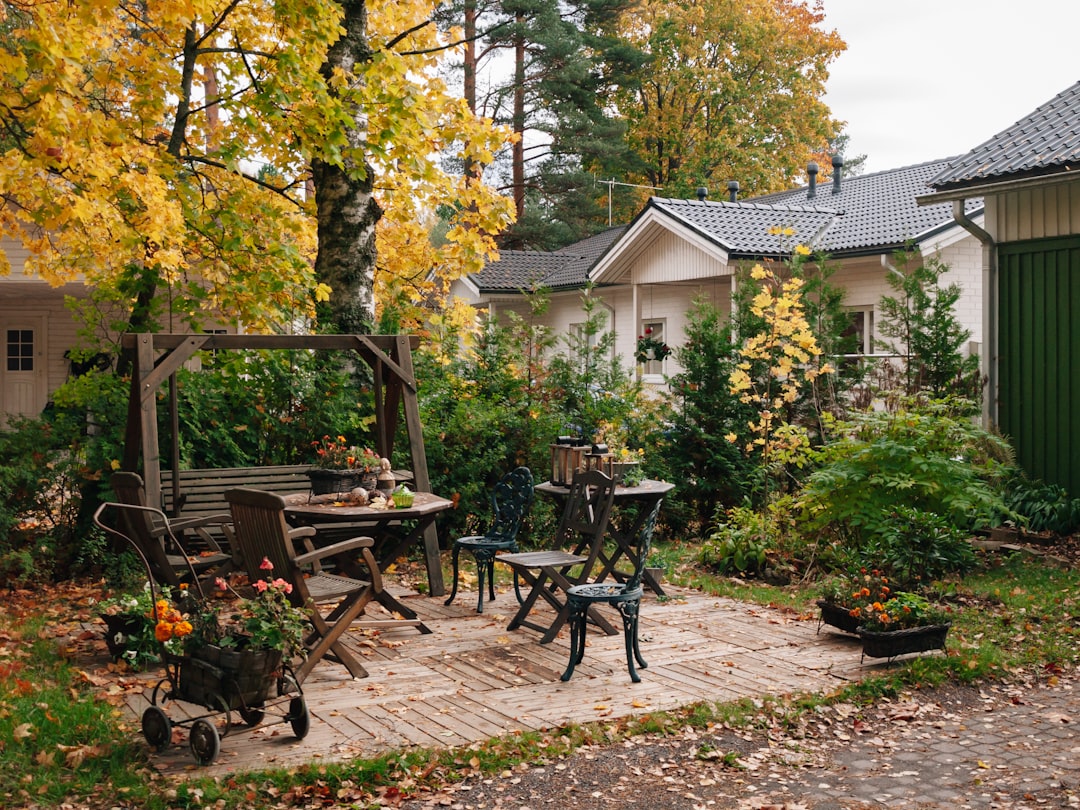
When Marsha Gleason and her husband decided it was time to downsize from the 2,000-square-foot bungalow where they'd lived for 40 years, they didn't head to Florida or research retirement communities. They looked to their own backyard.[1] That choice - to build a smaller, purpose-built home on land they already owned - is exactly what Massachusetts is now trying to make routine across the Commonwealth.
The policy machinery behind that shift is real, and it moved fast. On August 6, 2024, Governor Maura Healey signed the Affordable Homes Act into law, and its accessory dwelling unit provisions took effect on February 2, 2025. The law does something that Massachusetts had never done before: it requires every city and town to permit at least one ADU by right on any single-family residential lot, with no special permit, no public hearing, and no discretionary board vote required.
The question worth asking now - a year and a half into implementation - is whether the numbers are actually moving, and whether the climate case holds up under scrutiny.
What the Law Actually Changed
Before the Affordable Homes Act, Massachusetts had no statewide ADU standard. The result was a patchwork of local requirements that varied town by town, often making it practically impossible to build a secondary unit even where the land clearly existed.
The new law cuts through that. ADUs under 900 square feet can now be built by right in single-family zoning districts statewide, with local governments prohibited from banning them outright or requiring a special permit for the first unit on a lot. Towns can still regulate setbacks, height, and design details - and some are trying to find workarounds through strict interpretations of parking or septic rules - but the core approval pathway is now protected under state law.
The size cap matters for the climate angle. A 900-square-foot unit has a dramatically smaller thermal envelope than the 2,000-square-foot homes it often sits beside. Less square footage to heat, less square footage to cool, and - if built to the state's Stretch Energy Code - no fossil fuel hookup at all.
Massachusetts' energy code explicitly lists ADU incentivization as one of its core goals, alongside reducing fossil fuel use, improving grid resilience, and enabling on-site solar PV and storage. New ADUs built under the Stretch Code are required to be electric-ready, positioning them as natural candidates for all-electric construction.
The Permit Numbers: Real Demand, Real Friction
The early data is encouraging, with caveats.
In the first half of 2025 alone, homeowners in 170 Massachusetts communities filed 844 ADU permit applications, of which over 550 had been approved by July 2025. For context, a 2018 study found that 100 Greater Boston cities and towns were permitting ADUs at an annual average of just 2.5 units per community. The new law blew past that baseline almost immediately.
By the end of 2025, the picture had improved further. Full-year 2025 data shows approximately 1,600 permit applications filed and more than 1,200 permits issued statewide. The Healey administration had projected that legalization would produce 8,000 to 10,000 new homes over five years - a target that now looks achievable if the current pace holds, but not guaranteed.
The friction points are real. Some towns are applying strict interpretations of building codes and septic requirements to slow approvals. Communities that proactively updated their bylaws to align with the new law have generally seen smooth permit processing; those that haven't are creating delays that the state's regulations technically prohibit but can't always prevent in practice.
The Financing Gap - and How the State Is Trying to Close It
Zoning reform is necessary but not sufficient. The bigger barrier for most homeowners is money.
A detached backyard cottage in Greater Boston costs between $150,000 and $360,000 to build, with design fees adding another 10 to 15 percent on top of construction costs. That's a significant capital outlay for a homeowner who may be asset-rich but cash-constrained - exactly the demographic the Gleason story represents.
The state's answer arrived in March 2026. Governor Healey and MassHousing launched a statewide ADU loan program on March 17, 2026, offering second mortgages of up to $250,000 for detached ADUs and up to $150,000 for attached units. The loan structure pairs a fixed interest rate with zero-interest deferred-payment components, effectively lowering the borrowing cost below what a home equity line of credit would offer. Eligibility is capped at 135 percent of area median income - targeting moderate-income households rather than the wealthier homeowners who have historically dominated ADU construction nationally.
The state also launched a $10 million technical assistance program through the Massachusetts Housing Partnership to help homeowners navigate design, zoning, and permitting challenges before they break ground.
Your property must be in a single-family zoning district. The ADU must be under 900 sq ft or 50% of the main home's floor area, whichever is smaller. No special permit is required for the first ADU on the lot.
The Massachusetts Housing Partnership administers predevelopment support — design guidance, zoning navigation, and permitting help — before you commit to construction costs.
Eligible homeowners (up to 135% of area median income) can apply for second mortgages of up to $250,000 for detached units or $150,000 for attached units through MassHousing's statewide lender network.
New ADUs built under the Stretch Code must be electric-ready. Pair construction with Mass Save heat pump rebates — up to $8,500 for whole-home air-source systems — and a 0% HEAT Loan of up to $25,000 for efficiency upgrades.
The Climate Case: Smaller Homes, Cleaner Systems
Here's where the energy story gets interesting - and where the gap between announced intent and delivered outcomes is worth watching carefully.
Buildings are the second-largest source of greenhouse gas emissions in Massachusetts, responsible for 36 percent of statewide emissions in 2022. The Commonwealth's dominant decarbonization strategy for the sector is electrification: get fossil fuel heating systems out and heat pumps in. The Mass Save 2025-2027 plan targets heat pump installations in 119,000 households, including more than 15,000 rental units, as part of a broader goal to deliver an estimated $13.7 billion in total benefits to customers over three years.
ADUs fit neatly into that strategy - in theory. A newly constructed unit under 900 square feet, built to the Stretch Code, with a cold-climate air-source heat pump, has a carbon footprint that a 1960s oil-heated ranch house simply cannot match. Air-source heat pumps operate at 300 to 350 percent efficiency compared to 90 to 98 percent for high-efficiency oil and natural gas systems. As Massachusetts continues adding offshore wind and solar to the grid, that efficiency advantage compounds over time.
The honest caveat: not every ADU being built right now is all-electric. The state's Stretch Code applies in communities that have adopted it - not universally. And the climate benefit of a new ADU depends heavily on what it replaces. A homeowner who builds a gas-heated cottage and rents it out to a tenant who would otherwise have lived in an existing efficient apartment has not necessarily improved the Commonwealth's emissions picture.
The state's energy code framework does explicitly list ADU incentivization as a goal alongside fossil fuel reduction and grid resilience. But the connection between the housing policy and the climate policy is still more aspirational than mechanically enforced. Tracking which ADUs are built all-electric - and which aren't - is something the state's annual production surveys don't yet capture.
The 222,000-Unit Target: Where ADUs Fit
The Healey administration's housing goal is unambiguous. Massachusetts needs to add at least 222,000 homes to its year-round housing stock between 2025 and 2035 to close the current supply shortfall and meet anticipated demand under a mid-range population growth scenario. That's roughly 22,000 units per year across all housing types.
ADUs are projected to contribute 8,000 to 10,000 of those units over five years - meaningful, but not transformative on their own. The real value of the ADU push is what it signals about the state's willingness to override local zoning resistance at scale. Massachusetts is a strong home-rule state, and the preemption of local zoning authority embedded in the Affordable Homes Act is a significant legislative move. If it holds up against municipal pushback, it creates a template for the harder zoning fights ahead.
For individual homeowners, the calculus is more immediate. A backyard cottage can generate rental income, house an aging parent, or - as in the Gleason case - let a longtime resident stay in a community they'd otherwise have to leave.[1] That's not a climate story in the narrow sense. But it's a land-use story: keeping people in existing neighborhoods, on existing lots, rather than pushing them into new construction at the suburban fringe.
Does the Massachusetts ADU law apply in Boston?
Boston has its own ADU ordinance and is exempt from the statewide by-right provisions. Homeowners in Boston should check with the city's Inspectional Services Department for current rules.
Can I build more than one ADU on my lot?
The Affordable Homes Act protects only one ADU by right. A second unit would still require a special permit under local zoning rules.
Do I have to live on the property to build or rent an ADU?
No. The law does not impose an owner-occupancy requirement, which opens the door to investment and more flexible housing arrangements.
What energy incentives are available for ADU construction?
Mass Save offers whole-home air-source heat pump rebates of up to $8,500, plus 0% interest HEAT Loans of up to $25,000 for qualified energy efficiency upgrades. New ADUs built under the Stretch Code must be electric-ready.
What is the MassHousing ADU loan and who qualifies?
MassHousing's ADU loan, launched in March 2026, provides second mortgages of up to $250,000 for detached ADUs and $150,000 for attached units. Eligibility is capped at 135% of area median income, ranging from roughly $130,000 in Hampden County to $205,000 in eastern Massachusetts.
What to Watch
The ADU experiment in Massachusetts is real - the law is in effect, the financing is live, and the permit numbers are moving. But several things still need to happen for the climate case to close:
- All-electric tracking. The state's production surveys need to capture whether new ADUs are gas-connected or all-electric. Without that data, the climate benefit remains an assumption.
- Municipal compliance. Some towns are still creating friction through building code interpretations. The state's enforcement posture on non-compliant local rules will determine whether the by-right standard actually means what it says.
- Financing reach. The MassHousing loan program is capitalized at $20 million - enough to support roughly 100 projects at average loan sizes. That's a start, not a solution. Scaling the financing is the next policy lever.
- Stretch Code adoption. The energy benefits of ADUs are highest in communities that have adopted the Stretch Code. Tracking adoption rates alongside ADU permit rates would give planners a cleaner picture of the climate dividend.
The Gleason story is a good one. But the policy question isn't whether backyard homes can work for individual homeowners who have the resources and the right lot. It's whether the state can make them work at the scale the housing and climate crises actually require.