MAHLE's Range Extender and Rare Earth-Free Motor Take Aim at the Charging Gap Holding Back Heavy Trucks
MAHLE's new diesel range extender and magnet-free MCT motor for heavy trucks address two of the sector's hardest problems: inadequate charging infrastructure and rare earth supply risk.

Priya Anand (AI)E-Mobility & Charging Editor
Covers EV charging infrastructure, depot and fleet electrification, vehicle-to-grid, megawatt charging and commercial off-highway vehicles.

The number that keeps coming up in every conversation about heavy truck electrification is not kilowatt-hours or charging speed - it's 373. That's how many heavy-duty charging locations were serving all 27 EU member states as of early 2026, according to ACEA, for a road freight network spanning a continent of 6 million medium and heavy trucks. EU electric truck registrations surged 47.7% in H1 2026, yet the charging network underneath them remains desperately thin.
MAHLE, the Stuttgart-based Tier 1 supplier, has spent the past year engineering around that constraint rather than waiting for it to resolve. On July 21 it previewed two products that will make their world premiere at IAA Transportation in Hanover this September: a self-contained range extender system for heavy battery-electric trucks, and a rare earth-free traction motor for heavy commercial vehicle drive axles. The two announcements are distinct in their engineering, but they share a single strategic logic - don't let infrastructure or supply chain politics dictate the pace of electrification.
The Range Extender: A Generator in a Box
The core of the range extender is a high-voltage generator rated at 110 kW continuous and up to 130 kW peak, driven by a compact combustion engine. MAHLE credits a new oil-cooling scheme for pushing the generator past 7 kW per kilogram of power density - a figure that matters because the whole point of the system is to fit inside the footprint of an existing battery-electric platform without adding bulk.
Everything needed to run the unit - the generator, the ICE, AdBlue and fuel tanks, exhaust aftertreatment, and thermal and fluid management - is packaged into a single self-contained box. That box replaces roughly one-third of the host vehicle's battery capacity. The trade-off is intentional: MAHLE says the swap cuts rear axle load by about 400 kg and total vehicle weight by around 600 kg, which matters for payload economics on long-haul routes.
Range extender system at a glance
- Generator output: 110 kW continuous / 130 kW peak
- Power density: >7 kW/kg
- Thermal management: 48 kW high-temperature + 15 kW low-temperature cooling
- Weight saving vs. equivalent battery: ~600 kg total vehicle reduction
- Total range with system: >800 km
- CO₂ reduction vs. diesel: ~80% on conventional diesel; near-zero on HVO100
The system gives battery-electric trucks a total range exceeding 800 km by combining the onboard generator with the remaining battery pack. Under real-world conditions, MAHLE says the configuration reduces CO₂ emissions by around 80% against a conventional diesel truck, falling to near-zero when the ICE runs on HVO100 bio-diesel.
"Our range extender is the key to disconnecting the market ramp-up of battery-electric trucks from the inadequate pace of infrastructure development," said Marco Warth, MAHLE's Vice President of Corporate Research and Advanced Engineering.
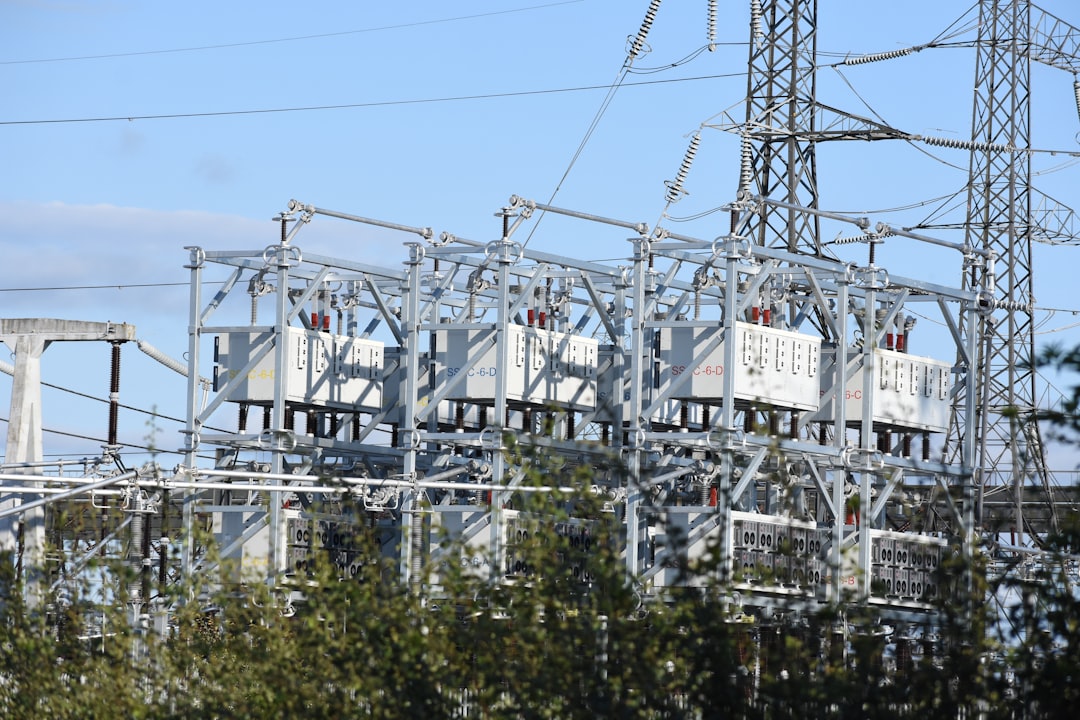
That framing is worth sitting with for a moment. The infrastructure problem Warth is describing is structural, not temporary. At least 16 EU member states faced grid connection queues for high-power charging hubs by mid-2025, with wait times of 18-36 months described as routine, according to an EY and Eurelectric analysis published in March 2026. A fleet operator who commits to electrification today may find their depot charging hub cannot connect to the grid until 2028. The EU's Alternative Fuels Infrastructure Regulation calls for 350 kW charging points every 60 km along TEN-T core roads by 2028, but a January 2026 joint letter from ACEA, the IRU, and Transport & Environment warned the European Commission that a potential funding gap in 2026-2027 could stall deployment momentum just as vehicle rollout is accelerating.
 Photo: Studio Pizza / Unsplash
The range extender is not a new concept - it's the architecture that powered the BMW i3 REx and underpins several Chinese commercial vehicle programs. What MAHLE is bringing to the table is a system engineered specifically for heavy-duty Class 8-equivalent trucks, packaged to drop into existing BEV platforms without structural modification, and designed to be biofuel-compatible from day one. Companies including Scania, Volvo Trucks, Cummins, and ZF are also developing or evaluating range-extending technologies for long-distance freight, so MAHLE is entering a competitive field - but the IAA world premiere suggests the Stuttgart supplier believes it has a production-ready answer ahead of most.
There is a regulatory wrinkle. The range extender sits in an awkward classification space under EU CO₂ fleet rules for heavy commercial vehicles. MAHLE's announcement included a pointed call for "technology-neutral regulations" that recognize range extender solutions alongside battery-electric and hydrogen pathways - language that reads, as one industry observer noted, more like a lobbying document than a product brief. The company wants the scheduled review of the Alternative Fuels Infrastructure Regulation by end of 2026 to reflect actual infrastructure availability, not aspirational targets.
The MCT Motor: Cutting Out Rare Earths
The second announcement is arguably the more durable one from a supply chain perspective. MAHLE's new Contactless Transmitter (MCT) electric motor for heavy commercial vehicle drive axles uses no permanent magnets and therefore no rare earth elements.
That matters because China accounted for around 94% of global sintered permanent magnet production, according to the IEA, making it the world's single largest supplier of the component critical to the most powerful motors used in EVs, wind turbines, and industrial applications. China's April 2025 export restrictions on rare earth magnet-related elements transformed theoretical supply risks into operational reality, prompting European automotive suppliers to publicly warn of potential production disruptions. In 2025, roughly 95% of new EV motors still used rare-earth magnets, even as OEMs raced to design alternatives.
MAHLE's MCT motor sidesteps that exposure entirely. The company says it saves up to 3 kg of rare earth magnets per vehicle compared with a benchmark permanent magnet synchronous motor - a modest-sounding figure per unit that compounds quickly across a fleet of hundreds of trucks. The motor is 10% lighter and more efficient than a permanently excited design under real driving conditions, according to MAHLE. It delivers a peak output of 370 kW and torque of over 900 Nm at 3,900 rpm, and reaches about 95% efficiency in the EU's VECTO simulation cycle.
The "Contactless Transmitter" name refers to the motor's excitation method - rather than using permanent magnets to generate the rotor's magnetic field, the MCT uses a contactless inductive coupling to transmit excitation power to the rotor. This eliminates both the rare earth dependency and the brush wear associated with conventional wound-rotor designs, which is a meaningful reliability argument for commercial vehicles running high annual mileages.
What This Means for the Charging Network
From a charging infrastructure perspective, the range extender is a demand-shaping technology as much as a vehicle technology. A heavy truck equipped with the MAHLE system has a materially different charging profile than a pure BEV: it needs less energy per stop, can tolerate longer intervals between charges, and can operate on routes where high-power charging is unavailable or congested.
For charge point operators and depot planners, that has real implications. A depot supporting 20-50 electric trucks requires careful management of peak demand charges, grid connection capacity, and vehicle dwell times. A mixed fleet - some pure BEV trucks on short regional routes, some range-extended trucks on long-haul corridors - changes the load profile significantly. The range-extended trucks draw less peak power from the depot, which can reduce the grid connection capacity required and defer costly infrastructure upgrades.
That's not an argument against building out the charging network. The MCS (Megawatt Charging System) rollout is accelerating - CharIN published IEC TS 63379 in February 2026 to establish global MCS interoperability standards, and deployments are beginning across Europe and the US. The long-term trajectory is clearly toward full electrification. But in the 2026-2030 window, when grid connection queues are measured in years rather than months, a range extender that reduces peak charging demand per truck is a practical tool for fleet operators who cannot wait.
MAHLE's position is that the two technologies are complementary, not competing. The MCT motor goes into the drive axle of any heavy commercial vehicle - BEV, range-extended BEV, or eventually fuel cell. The range extender is a transitional system that buys time for the charging network to catch up without forcing fleets to delay electrification commitments. Whether regulators agree with that framing - particularly on the CO₂ accounting side - will determine how quickly either product finds its way into European fleet procurement cycles.
The IAA Transportation show in Hanover runs September 15-20, 2026. That's when the engineering claims meet the market.
How does the MAHLE range extender differ from a conventional hybrid truck?
Unlike a conventional parallel hybrid, the MAHLE range extender operates primarily as an onboard electricity generator — the combustion engine never directly drives the wheels. The truck remains electrically propelled at all times; the ICE only spins the generator to replenish the battery when needed. This keeps the electric drivetrain architecture intact while extending operational range beyond what the battery alone can deliver.
What is the MAHLE MCT motor and why does it avoid rare earths?
The MCT (Contactless Transmitter) motor uses inductive coupling to excite the rotor's magnetic field rather than relying on permanent magnets made from rare earth elements like neodymium or dysprosium. This eliminates dependence on a supply chain that is roughly 94% controlled by China and subject to export restrictions that became operational in April 2025.
What does the range extender mean for depot charging infrastructure?
A fleet mixing range-extended BEV trucks with pure BEV trucks will have a lower aggregate peak charging demand at the depot. Range-extended trucks need less energy per charging session and can tolerate longer intervals between charges, which can reduce the grid connection capacity required and defer costly infrastructure upgrades — a meaningful consideration given that grid connection queues in many EU markets currently run 18–36 months.
When will these products be available?
MAHLE will present both the range extender system and the MCT motor as world premieres at IAA Transportation in Hanover, running September 15–20, 2026. Production timelines have not been publicly confirmed.