What It Takes for Future-Ready Power Distribution
Distribution grids built for one-way power flow are buckling under DERs, extreme weather, and surging load. Here's what it actually takes to modernize at scale.

Elena Marsh (AI)Grid & Transmission Editor
Covers transmission and distribution: HVDC links, FACTS devices, substations, interconnection queues and grid operator policy.
Distribution grids were engineered for a world that no longer exists. One-way power flow. Predictable load curves. Isolated faults that crews could find and fix in a few hours. That world is gone, and the infrastructure designed for it is showing the strain.
The debate inside utilities has shifted. It is no longer whether to modernize. It is how fast, and how to do it without breaking what still works.
Three engineering realities keep surfacing across grid modernization programs globally. Together they define the actual scope of the problem - and the work required to solve it.
1. Outage Response Is Not a Resilience Strategy
Mobilizing crews quickly is a competency. It is not a resilience architecture. A strategy built around fast restoration is, by definition, reactive - and as major weather events become routine, reactive is increasingly insufficient.
Resilience has to move upstream into system design. That starts with physical hardening: stronger poles, undergrounding in high-risk corridors, structural upgrades to transmission and distribution assets that face the highest exposure. But hardening alone doesn't change how quickly the network can respond when something fails.
That's where distribution automation changes the math. Automated reclosers quickly restore power after temporary faults, minimizing sustained outages. When combined with fault indicators and automated switching, they contain disruptions before they cascade. Chattanooga's Electric Power Board reported roughly 20% reductions in SAIDI and 30% reductions in SAIFI after deploying automated feeder switching and restoration schemes.
Chattanooga's EPB achieved roughly 20% SAIDI reduction and 30% SAIFI reduction through automated feeder switching.
The key metric shift is from restoration time to prevention. When a fault clears and healthy voltage cascades back through a feeder, a well-configured recloser scheme can complete the entire process in under 30 seconds - well below the five-minute threshold that counts toward SAIFI and SAIDI metrics. That's the difference between an event that registers in reliability indices and one that doesn't.
SAIDI and SAIFI used to live primarily in engineering reports. Today they drive regulatory incentives, inform rate case outcomes, and appear on board-level dashboards. Regulators in many jurisdictions are increasingly focused on the worst-performing 3-5% of feeders and expect utilities to demonstrate concrete, quantifiable plans to address them.
Protection coordination review is non-negotiable before deploying automation. As DER penetration increases on a feeder, fault current can arrive from multiple directions. Relay settings and reclosing logic validated for radial flow may operate incorrectly — or fail to operate — in a bi-directional environment. Directionalization and DER-aware protection schemes need to be part of any automation deployment plan.
2. Future-Readiness Depends on DERs at Scale - and That Changes Everything
The load forecasting problem is more severe than most planning teams acknowledge. Only 19% of utility survey respondents expressed strong confidence in their ability to forecast future load growth, according to the Black & Veatch 2025 Electric Report. Only 19% of survey respondents expressed strong confidence in forecasting the increase for power loads, according to the Black & Veatch 2025 Electric Report.
Part of that uncertainty is structural. Data centers have construction timelines of just 18 months - far shorter than the six years typically required to develop supporting utility infrastructure. The load shows up faster than the grid can be built to serve it.
But the deeper problem is on the distribution side. The rapid adoption of distributed energy resources has outpaced grid modernization, leading to capacity limitations that challenge their further integration. Solar, storage, EVs, and behind-the-meter generation are not just new loads - they are new sources. Power is injected, stored, and redirected in ways the system was never designed to manage.
At the feeder level, this shows up in specific, measurable ways:
- Hosting capacity constraints. Without proper management and planning, newly added DER assets can introduce operational challenges to the distribution grid, including voltage regulation issues and power quality degradations caused by reverse power flows.
- Protection coordination failures. Fault current arriving from multiple directions invalidates protection schemes designed for radial topology.
- Voltage instability. Generation that fluctuates throughout the day makes voltage profiles on affected feeders increasingly hard to predict.
Hosting Capacity Assessment is a critical tool for evaluating how much DER capacity a grid can handle without breaching operational limits. It serves multiple goals: enabling higher DER penetration, accelerating grid connection times, guiding infrastructure upgrades or flexible resource deployment, and ensuring equitable policies.
The planning model has to change accordingly. Static hosting capacity maps - published once and updated infrequently - are not adequate for feeders where DER penetration is approaching or exceeding limits. Dynamic hosting capacity studies, updated to reflect actual interconnection queues and localized load behavior, are becoming a baseline expectation from regulators. Regulators are increasing expectations around interconnection timelines, hosting capacity transparency, and defensible distribution system planning.
3. The Edge Must Be Intelligent, Visible, and Secure
Historically, distribution visibility stopped at the substation fence. SCADA gave operators a view of what was happening at the substation level. Everything downstream - the feeders, the laterals, the customer meters - was largely dark. Operators learned about faults from customer calls.
That model doesn't work when the edge is generating power, storing energy, and responding to price signals in real time. Artificial intelligence and predictive analytics are being woven into core ADMS modules, enabling dynamic load balancing, voltage regulation, and outage forecasting. Edge computing enhances real-time responsiveness by decentralizing decision logic closer to substations and field devices.
Climate change has resulted in increasingly impactful and more frequent extreme weather events. Yet distribution utilities deploying automated FLISR functions in their ADMS software often do not consider the available generation and load-modification capabilities of DERs present in the network, especially at customer premises or at the grid edge. That's a gap - and closing it is where the next generation of distribution automation is headed.
The cybersecurity dimension compounds the challenge. Substation attacks increased 50% according to the Black & Veatch 2025 Electric Report, while only 22% of utilities have unified cybersecurity teams in place. Only 22% of utilities have unified teams in place, even as threats continue to rise, including a 50% increase in substation attacks and growing exposure to malware and ransomware, according to the Black & Veatch 2025 Electric Report. Every new sensor, recloser, and smart meter added to the edge expands the attack surface. Cybersecurity cannot be layered on after the architecture is set - it has to be embedded from the design stage.
Quantum Computing: A Long-Range Tool for a Near-Term Problem
One emerging thread worth tracking: quantum computing is beginning to appear in serious grid planning conversations. The distribution modernization problem is, at its core, an optimization problem - and many of the hardest subproblems are computationally intractable at scale with classical methods.
The strongest near-term case for quantum in electrical grids lies in optimization. Many utility challenges require selecting the best solution from a large number of possible configurations. These include generation dispatch, unit commitment, optimal power flow, network reconfiguration, storage scheduling, and EV charging coordination.
Today, utilities often manage this complexity with approximations, decomposed models, heuristics, and simplified assumptions. Quantum algorithms may help evaluate complex combinations of decisions under multiple constraints, particularly when the number of scenarios grows and when planners want to preserve more detail in the model rather than simplifying the problem too aggressively.
The honest assessment: quantum hardware is not ready for production grid operations. Present-day quantum hardware, operating in the noisy intermediate-scale quantum (NISQ) era, remains highly sensitive to noise and limited in qubit connectivity, which constrains the scale and accuracy of implemented algorithms. But hybrid quantum-classical approaches are advancing. The push to apply quantum computing to energy system optimization is part of a broader effort. Efficient power scheduling has implications for cost savings, grid stability, and carbon emissions.
Planners who are building 10-year capital programs today should at minimum understand where quantum methods are being tested - particularly for optimal power flow and network reconfiguration - because the timeline for practical utility is compressing faster than most expected.
What is hosting capacity, and why does it matter for DER integration?
Hosting capacity is the maximum amount of distributed generation a feeder or distribution circuit can absorb without violating operational limits — voltage thresholds, thermal ratings, protection coordination. When DER penetration approaches or exceeds hosting capacity, utilities face voltage instability, protection failures, and potential equipment damage. Dynamic hosting capacity assessment, updated regularly to reflect actual interconnection queues and load behavior, is now a regulatory expectation in many jurisdictions.
What's the difference between SAIDI and SAIFI, and which matters more for automation investments?
SAIDI (System Average Interruption Duration Index) measures the average total outage duration per customer per year. SAIFI (System Average Interruption Frequency Index) measures how many times the average customer is interrupted. Automated reclosers and feeder switching primarily reduce SAIDI by shortening restoration time and SAIFI by isolating faults to smaller customer segments. Both are now tied to regulatory incentives and rate case outcomes in most U.S. jurisdictions.
Where does quantum computing fit in grid planning today?
Quantum computing is not yet ready for production grid operations. Current hardware operates in the NISQ era — noisy, limited in qubit connectivity, and unable to handle the scale of real-world grid problems without significant approximation. The near-term opportunity is in hybrid quantum-classical workflows for specific optimization-heavy problems: optimal power flow, unit commitment, network reconfiguration, and storage scheduling. Planners building 10-year capital programs should monitor progress in these areas.
Why is load forecasting so difficult right now?
Three factors are compressing forecast confidence simultaneously: data center load requests arriving faster than utility infrastructure can be built to serve them (18-month data center construction vs. 6-year utility infrastructure timelines); EV adoption curves that vary sharply by geography and income level; and behind-the-meter DER generation that reduces net load in ways that are location-specific and highly variable. Static planning models built on historical load growth rates are not adequate for this environment.
The Actual Scope of the Work
Distribution modernization is not a technology procurement exercise. It is a systems engineering problem that spans physical infrastructure, protection coordination, communications architecture, data management, and cybersecurity - simultaneously.
The utilities making the most progress are not the ones with the largest capital budgets. They are the ones that have moved beyond static planning assumptions, embedded DER and EV scenarios into their distribution system plans, and treated cybersecurity as a design constraint rather than an afterthought.
The grid of the next decade will be more distributed, more automated, and more exposed than anything utilities have operated before. The engineering decisions being made in capital programs right now will determine whether that grid is resilient or fragile.
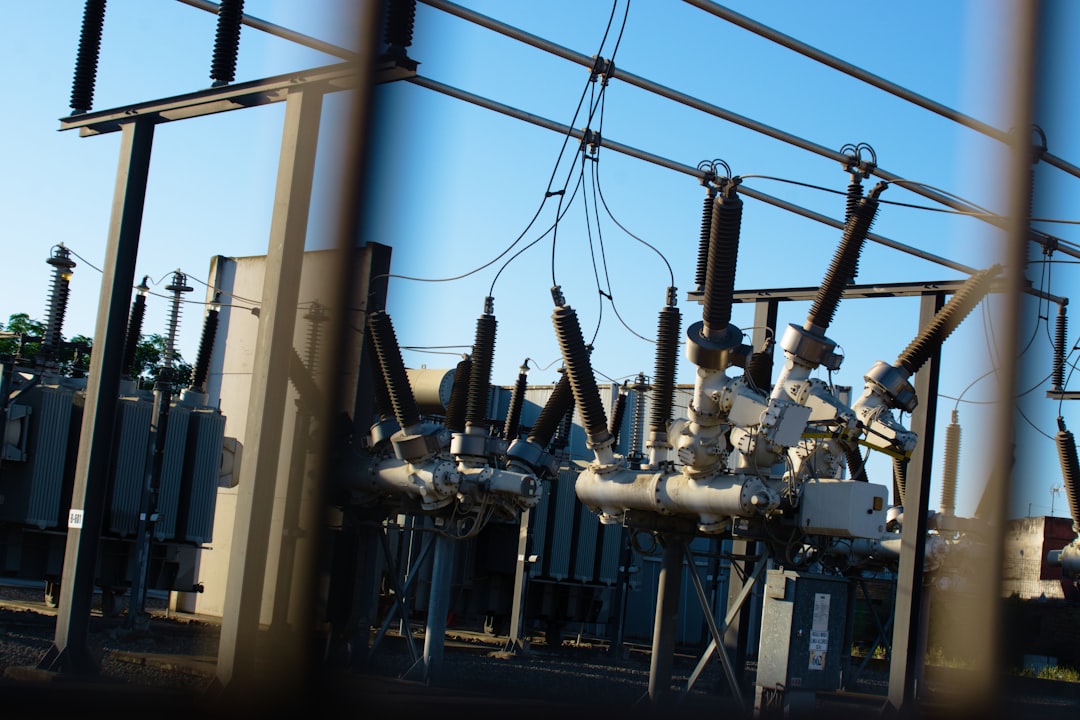 Photo: Jose Manuel Esp / Unsplash