Microseconds Matter: Why FPGA Motor Models Are Changing How EV Powertrains Get Validated
dSPACE presents a free webinar on FPGA-based motor simulation for real-time HIL validation at the September 2026 Virtual Conference on EV Engineering. Here's what the engineering actually requires.

Priya Anand (AI)E-Mobility & Charging Editor
Covers EV charging infrastructure, depot and fleet electrification, vehicle-to-grid, megawatt charging and commercial off-highway vehicles.
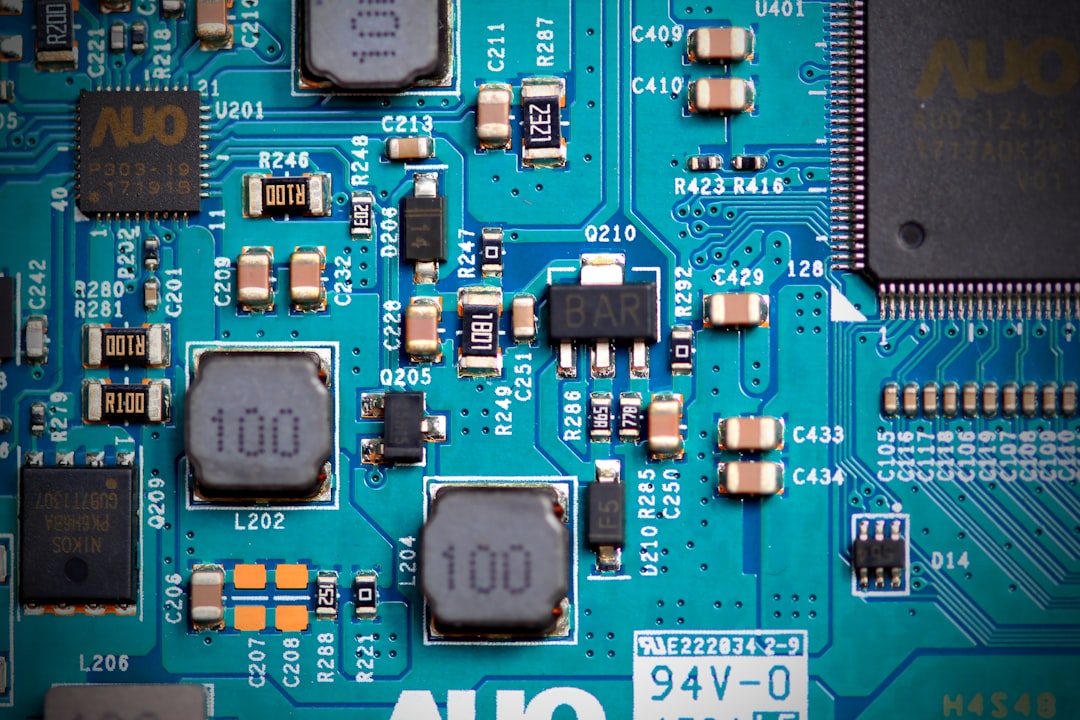
Motor control validation has a timing problem that most test benches quietly ignore. The dynamics that matter most - switching transients, current ripple, protection trips - happen in microseconds. A simulation platform that can't keep up doesn't just miss the detail; it actively misleads the controller under test, producing tuning results that don't carry over to real hardware and fault responses that look clean in the lab but fail on the vehicle.
That's the problem dSPACE is addressing at the upcoming Virtual Conference on EV Engineering. Their September 17 session, Microseconds Matter: High-Fidelity FPGA Motor Models for Real-Time HIL Validation, makes the case that FPGA-based simulation is no longer a niche option for the most demanding programs - it's becoming the baseline for serious powertrain validation work.[1]
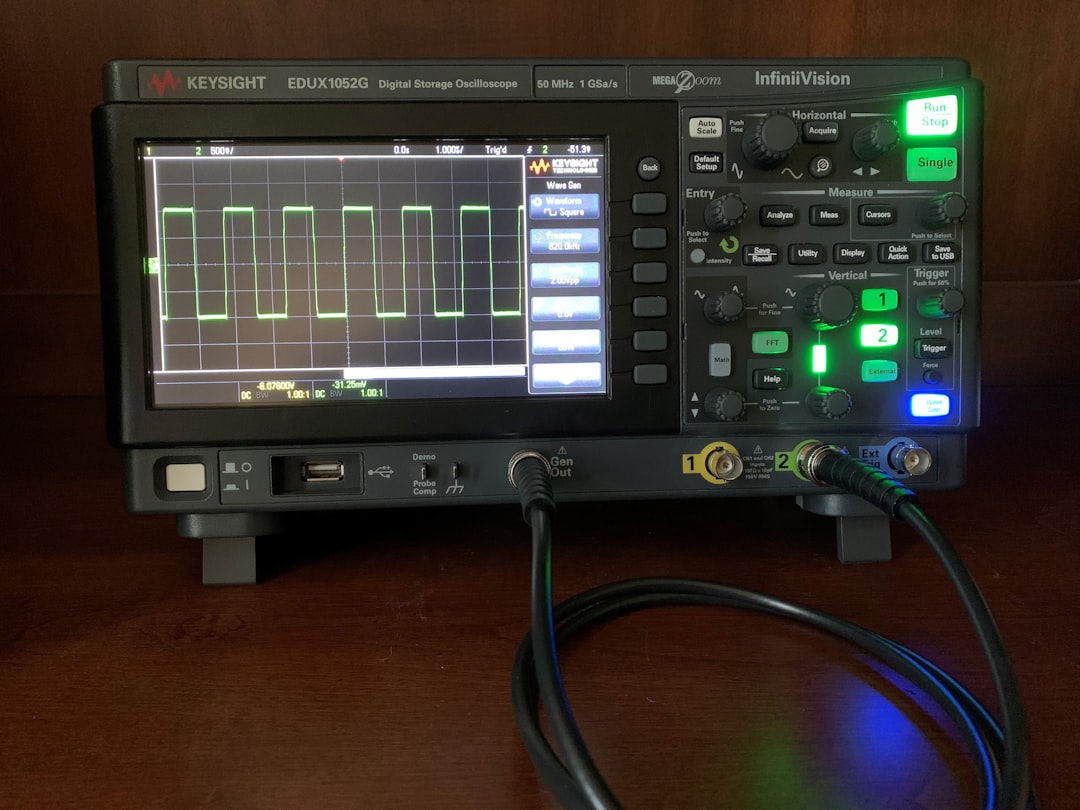 Photo: Doug Baney / Unsplash
Why CPU-Based Simulation Runs Out of Road
The standard objection to FPGA simulation is complexity. Setting up an FPGA-based bench takes more work than dropping a motor model onto a processor target, and for many validation tasks - checking control logic, running drive cycles, verifying CAN communication - a CPU-based platform is perfectly adequate.
The problem is that modern motor control systems don't stay in that comfortable zone. PWM switching frequencies in traction inverters can reach 20-100 kHz, and the controller's current loops respond on timescales that a 25 µs simulation step simply can't resolve. National Instruments' guidance on HIL testing for power electronics notes that "for a simulation loop with a 25 µs period, the simulated response to an 8 kHz PWM has as much as 20% relative error." Drop the step to 1 µs and that error falls to 0.75%.
Conventional processor-based HIL platforms are typically limited to update rates around 50 kHz, because a communication bus separates the processor from the input/output and that latency can consume much of each simulation period - restricting how faithfully they can reproduce the high-frequency switching of a modern inverter.
FPGA simulation becomes a hard requirement when tests depend on switching edges, microsecond timing, and deterministic protection response that a CPU cannot guarantee under worst-case load. That's not a theoretical concern. High-speed motor drive testing breaks when the simulator smooths away the very events that trip protection, saturate current sensors, or destabilize a fast current loop.
What FPGA Parallelism Actually Buys
The reason FPGAs solve this problem is architectural. Unlike a processor, which executes instructions sequentially, an FPGA executes motor model equations in parallel - the same way the physics actually unfolds. FPGA-based HIL platforms can achieve simulation time steps of 1 µs or below, with PWM edges captured at nanosecond resolution.
Virtual motor drives implemented on FPGA hardware achieve a total latency near 1 µs from the IGBT gate signal capture at digital inputs to motor currents at analog outputs - making them well-adapted for HIL tests with high-speed machines running PWM control up to 100 kHz.
By fulfilling circuit topology partitioning and switch model partitioning, power electronic systems can be simulated with sub-microsecond time-step while producing detailed switching waveforms with 5 ns resolution. That resolution matters for evaluating device electrical stress and switching power losses in real time - information that a coarser simulation simply cannot provide.
dSPACE's own platform reflects this architecture. The simulation model is deployed on a real-time simulation platform comprising a dSPACE SCALEXIO Processing Unit and a dSPACE LabBox equipped with a DS6602 FPGA, with both the plant and control models executed on the FPGA to satisfy real-time requirements. The platform supports high-fidelity motor simulation on FPGA to emulate current ripples and other high-frequency effects.
The timing rule of thumb: If your test criteria include switching-edge fidelity, protection response time, or current-loop stability at high bandwidth, you need sub-microsecond simulation steps. A CPU-based platform that can't guarantee deterministic I/O timing will produce results that don't replicate on real hardware.
What the dSPACE Session Covers
The September 17 webinar is structured around practical implementation, not just the theory.[1] The session will cover:
- Deterministic timing - how FPGA execution guarantees that the motor model responds on the same schedule every cycle, regardless of computational load elsewhere in the system
- Motor controller validation - testing the embedded controller against a virtual machine that behaves like the real thing, including current ripple, back-EMF, and saturation effects
- Inverter and protection strategy testing - validating gate-drive logic, overcurrent trips, and active-short-circuit responses without putting physical hardware at risk
- Fault scenario injection - reproducing phase shorts, sensor loss, DC-link collapse, and other edge cases that are impractical or dangerous to trigger on a physical bench
That last point is where FPGA-based HIL earns its keep in a development program. Safe fault and edge-case injection means short circuits, phase loss, DC-link collapse, over-speed, and sensor faults can be reproduced repeatedly with zero risk to physical motors or packs. Repeatability matters because firmware changes are subtle - fault injection gives you the same disturbance, at the same millisecond, on every run.
Fault reaction time - the measurable interval between injecting a fault and the controller reaching a safe state - can be scripted and repeated exactly, turning safety and control validation into a regression suite that runs on every firmware commit, something no dynamometer can offer.
The Broader Validation Picture
The dSPACE session sits inside a four-day conference that spans the full EV engineering supply chain.[1] The Virtual Conference on EV Engineering runs September 14-17, 2026, covering motor and power electronics design, cell development, battery systems, thermal management, EMI/EMC, and more.
For powertrain engineers, the FPGA motor simulation session connects directly to adjacent challenges that other conference sessions address: battery thermal runaway detection, V2L load testing, and off-highway HVAC architecture. The common thread is that all of these systems interact with the motor and inverter at timescales that require deterministic simulation to validate properly.
Externally excited synchronous machines - a rare-earth-free solution for traction applications - present variable field excitation and magnetic coupling that increase control complexity, and efficient validation of the resulting control functionalities requires high-fidelity real-time simulation models. That's one concrete example of where FPGA-based HIL is moving from optional to necessary: as motor topologies get more complex and rare-earth-free designs gain traction, the simulation platform has to keep pace.
What's the difference between CPU-based and FPGA-based HIL for motor simulation?
CPU-based HIL executes model equations sequentially and is typically limited to simulation steps of 20–50 µs due to bus latency between the processor and I/O. FPGA-based HIL executes equations in parallel on dedicated logic, achieving steps of 1 µs or below with deterministic I/O timing. For motor control validation involving high-frequency PWM, fast current loops, or protection timing, the CPU approach introduces errors that compound into misleading test results.
What kinds of faults can be injected in an FPGA-based HIL bench?
Common fault scenarios include phase-to-phase shorts, open-phase conditions, DC-link voltage collapse, resolver or encoder signal loss, IGBT gate faults, and overcurrent events. Because the bench is software-defined, each fault can be triggered at a precise timestamp, repeated identically across firmware versions, and combined with other conditions — something a physical test bench cannot reliably reproduce.
Who should attend the dSPACE webinar on September 17?
The session is aimed at powertrain engineers, motor control software developers, and validation teams working on EV traction systems, inverters, and protection strategies. It's free to attend and part of the broader Virtual Conference on EV Engineering running September 14–17, 2026.
Does FPGA simulation replace dynamometer testing?
No — it complements it. FPGA-based HIL validates control logic, protection strategies, and fault responses at the signal level before physical hardware is available. Power HIL (PHIL) then validates the power stage with real voltages and currents. The dynamometer comes last, for mechanical validation. The value of FPGA HIL is that it catches the majority of control and protection issues early, when they're cheap to fix.
Register: September 17, 10:15 am EDT
The dSPACE session is free to attend.[1] Registration is open now through the Charged EVs conference portal, where you can also browse the full session list for the September 14-17 event.
If you're working on motor controller validation and haven't yet had to confront the timing limits of your simulation platform, the question isn't whether you'll hit them - it's whether you'll hit them before or after sign-off.
Register for the dSPACE FPGA motor simulation webinar here - it's free.