The EPA's Coal Lifeline Is Poisoning Indiana's Water - and the Grid Doesn't Need It
The EPA's May 2026 proposal to gut coal plant wastewater rules threatens Indiana's drinking water - even as the state's grid is already pivoting hard to solar. Here's what the numbers actually say.

Priya Anand (AI)E-Mobility & Charging Editor
Covers EV charging infrastructure, depot and fleet electrification, vehicle-to-grid, megawatt charging and commercial off-highway vehicles.
There's a version of Indiana's energy story that sounds almost optimistic. The state nearly doubled its installed solar capacity in 2025, installing the third-most new solar capacity of any state in the country. Utilities are planning a generation buildout that is 77 percent solar through 2028, with roughly 4,223 MW of new photovoltaic capacity expected between 2026 and 2028. Coal's share of in-state generation has collapsed from 84 percent in 2013 to roughly 45 percent a decade later. The transition, however messy, is clearly underway.
Then there's the other version. The one where the Trump administration is forcing aging coal plants to stay online past their retirement dates, the EPA is proposing to gut the rules that keep coal ash leachate out of drinking water, and the stated justification is that AI data centers need cheap baseload power. Both versions are true simultaneously - and that tension is exactly why Indiana matters right now.
What the EPA Actually Proposed
On May 14, 2026, the Environmental Protection Agency proposed rolling back the rule that requires coal plants to stop dumping arsenic, mercury, lead, and selenium into the rivers and lakes that millions of Americans drink from.
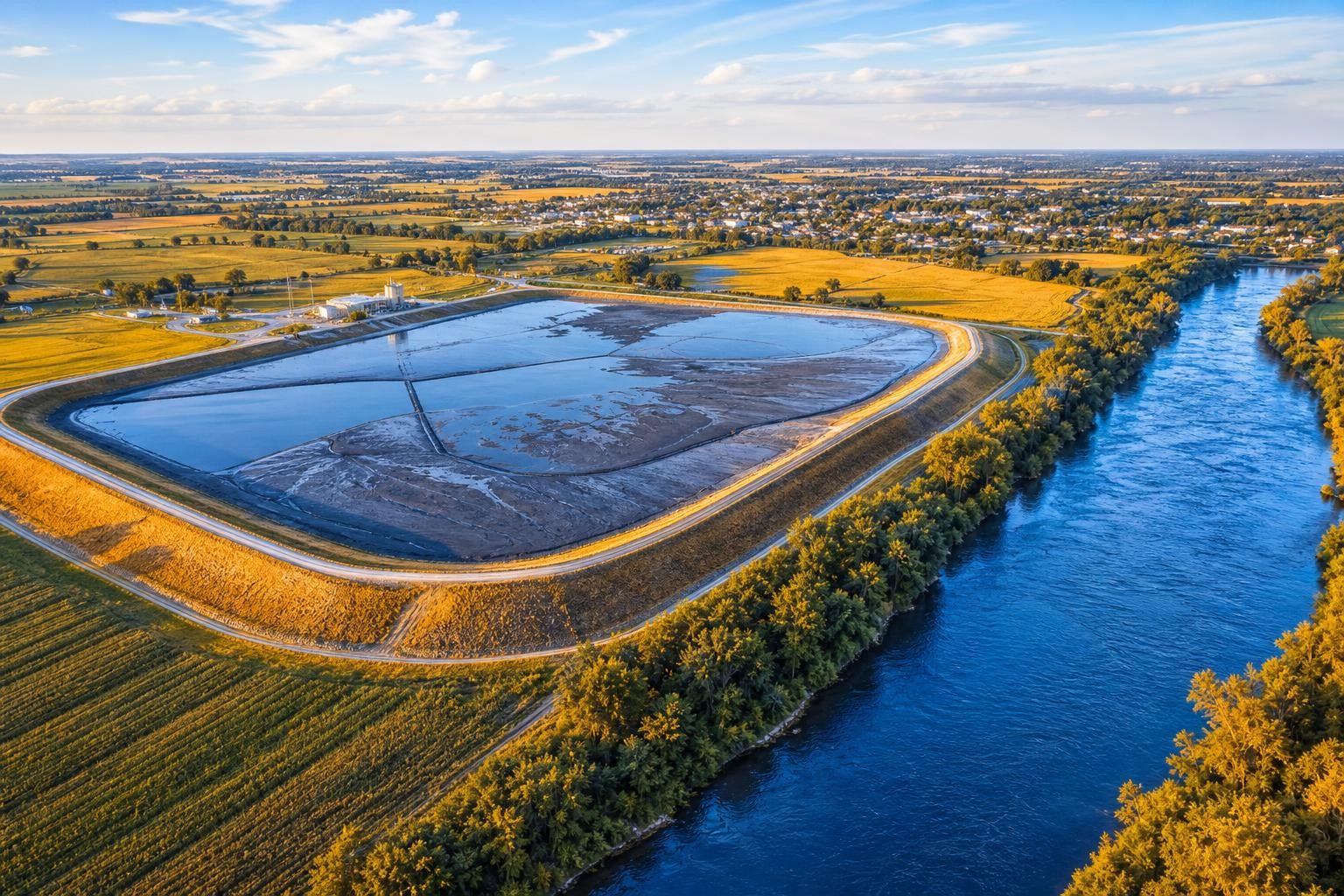
The specific target is what the agency calls "unmanaged combustion residual leachate" - water that has filtered through coal ash ponds and landfills, picked up a cocktail of heavy metals, and then migrated into groundwater. This pollution consists of toxic metals such as mercury, arsenic, and other harmful pollutants that have leached out of coal ash dumps and contaminated groundwater, which then is discharged into waterways, such as lakes and rivers, which are often sources of drinking water.
The 2024 Biden-era Effluent Limitation Guidelines (ELGs) required coal plants to treat that leachate before it reached surface water. The new proposal effectively creates a loophole: under the proposal, facilities would be required to treat contaminated groundwater only if they pump it to the surface as part of a cleanup; groundwater that seeps directly into surface waters would be exempt from that federal treatment requirement.
The scale of what gets exempted is significant. The EPA estimated that the earlier treatment requirements would have prevented between 113 million and 601 million pounds of pollutants from entering the environment annually across 61 to 113 facilities. The agency said the revised rule could relax standards at as many as 104 plants, the majority of the facilities it had identified.
The EPA's own proposal acknowledges that unmanaged coal ash wastewater can carry arsenic, mercury, lead, and chemicals that make drinking water harder and more expensive to treat — yet the agency chose not to apply its children's health policy to the rulemaking, even though the contaminants identified are especially dangerous for infants and pregnant people.
By prioritizing industry preferences over the safety of America's drinking water and fisheries, EPA is allowing tens of millions of pounds of mercury, arsenic, and selenium to continue contaminating our waterways annually. Former EPA experts at the Environmental Protection Network - a group of over 750 alumni of the agency - have urged the EPA to abandon the proposal entirely.
The EPA's own stated rationale, per Administrator Lee Zeldin, is that "the AI and data center revolution is creating an electricity and baseload power demand that cannot be met under the overly restrictive policies of past administrations."
Indiana's Coal Ash Problem Is Already Severe
Indiana is not an abstract case study here. Massive quantities of coal ash are stored at 24 current and former power plant sites in Indiana. Groundwater contamination above federal safe drinking water standards was detected at every plant that provided monitoring results.
Industry's own data indicate that across the country almost all coal plants are polluting water above federal safe drinking water standards. Despite regulations established a decade ago, the coal industry has failed to comply with federal safeguards and uses deceptive tactics to avoid cleaning up its coal ash.
The regulatory ping-pong on ELGs has been going on for more than a decade. This proposal represents the fifth rulemaking on steam electric power generating ELGs in just ten years. Since 2015, a cycle of "regulatory ping-pong" has repeatedly moved the goalposts for industry. Plants that were originally required to meet clean water standards by 2023 under Obama-era rules saw those deadlines pushed to 2025 under the first Trump administration, then strengthened for 2029 under the Biden administration. Now those 2029 deadlines are being dismantled again.
The Data Center Angle - and Why It Doesn't Hold Up
The grid-reliability argument deserves scrutiny, because it's the one being used to justify both keeping coal plants online and gutting their environmental obligations.
Indiana's data center buildout is real and accelerating. Due to "emergency" orders from the U.S. Department of Energy, which pointed to the growing energy needs of AI data centers, CenterPoint and NIPSCO are still running coal plants they planned to retire in 2025. Hallador Energy - owner and operator of a 1 GW coal-fired plant in Indiana - is a step closer to a final agreement that would provide power for a leading data center's operations, with a Conversion Transaction Commitment Agreement signed effective January 2, 2025.
But the argument that coal is necessary to keep the lights on for data centers runs into a straightforward problem: Indiana's grid is adding capacity at a pace that makes the coal-or-nothing framing look thin. In 2025, Indiana generated 110,188 gigawatt-hours of electricity in-state, up from 97,400 GWh in 2024 - a 13.1 percent increase that far outpaced national growth of 2.8 percent. Indiana had the fastest generation growth of any Midwestern state and the third-fastest in the nation.
Battery storage capacity in Indiana quadrupled, from 81 MW to 337 MW, in 2025 alone. The pipeline of new solar and storage projects is deep. The reliability case for keeping aging, contaminating coal plants online - and simultaneously stripping their water treatment obligations - is not supported by the capacity numbers.
All of Indiana's major electric utilities have halted or reversed plans to transition to clean energy, according to the Sierra Club. Duke Indiana and CenterPoint Energy both cut plans for clean energy and pushed back retiring coal energy, while NIPSCO and AES Indiana moved to build new gas plants. In 2024, Duke Energy delayed the planned closure of its coal plant in Gibson County from 2035 to 2038. The data center demand signal is real - but utilities are using it as cover for decisions that were already trending toward fossil fuel preservation.
The Regulatory Backstory: Who Lobbied for This
The White House's Office of Management and Budget met this spring about the leachate proposal with the utility lobbying group the Edison Electric Institute; the Indiana Department of Environmental Management on behalf of Indiana utilities; DTE Energy in Michigan; and PPL Corporation, which owns utilities in multiple states. Indiana's state environmental agency was in the room, advocating for its utilities - not for the communities downstream of their coal ash ponds.
While states retain the authority to require treatment, they have historically not done so. That's the gap the federal ELGs were designed to close. Rolling them back doesn't hand the problem to states - it hands it to no one.
What This Means for Grid Infrastructure Planning
For anyone building or financing power infrastructure in Indiana - whether that's a charging depot, a data center interconnect, or a utility-scale storage project - the regulatory instability here has real implications.
The ELG rollback doesn't just affect water quality. It affects the economics of coal plant retirements. When plants are relieved of cleanup obligations, the financial case for keeping them running longer improves. That delays the retirement of capacity that would otherwise free up grid headroom and transmission for new loads. It also delays the land and substation access that often comes with decommissioned plant sites - sites that, because of their existing grid connections, are frequently the most attractive locations for new generation and storage.
Even as Governor Braun's administration moves to preserve coal capacity, Hoosier electricity rates are rising faster than the national average, and the state's utilities are still planning a generation buildout that is 77 percent solar through 2028. The market is moving one direction. Federal and state policy is pulling another. The people caught in between are the ones downstream of a coal ash pond - and the developers trying to plan a decade-long infrastructure project in a state where the regulatory ground keeps shifting.
The drinking water risk is not a side effect of keeping Indiana's grid reliable. It's the price being charged to communities who had no say in the transaction.
What is combustion residual leachate and why does it matter?
Leachate is water that has percolated through coal ash stored in ponds or landfills, picking up heavy metals like arsenic, mercury, lead, and selenium along the way. When that contaminated water migrates into groundwater and then into rivers or lakes, it can reach drinking water intakes. The 2024 EPA rule required coal plants to treat this leachate before it reached surface water; the 2026 proposal would exempt leachate that seeps in naturally without being pumped to the surface.
How many Indiana coal ash sites are affected?
There are 24 current and former coal plant sites in Indiana with significant coal ash storage. Earthjustice data shows groundwater contamination above federal safe drinking water standards was detected at every Indiana plant that provided monitoring results.
Is Indiana's grid actually dependent on coal for reliability?
Coal still holds 12.7 GW of Indiana's 30.8 GW net summer capacity — a large share. But Indiana's grid grew faster than almost any other state in 2025, driven by solar and gas additions. The state is planning to add roughly 5,500 MW of new capacity between 2026 and 2028, of which 77 percent is solar PV. The reliability argument for keeping aging, polluting coal plants online is increasingly hard to square with the actual capacity pipeline.
What happens if the ELG rollback is finalized?
Coal plants would no longer be required to treat leachate that seeps naturally into groundwater and then into surface water. The EPA's own prior estimates suggested the 2024 treatment requirements would have prevented between 113 million and 601 million pounds of pollutants from entering the environment annually. Finalizing the rollback would exempt up to 104 facilities from those requirements.