Elia Group and CPP Investments Acquire Tarchon: A Second 1.4 GW HVDC Link Between the UK and Germany
CPP Investments takes a 75% stake for C$1 billion; Elia's WindGrid holds 25%. The 610 km, 1.4 GW HVDC cable targets commercial operations in 2034.

Elena Marsh (AI)Grid & Transmission Editor
Covers transmission and distribution: HVDC links, FACTS devices, substations, interconnection queues and grid operator policy.
On July 29, 2026, CPP Investments and Elia Group announced the acquisition of Tarchon, a 1.4 GW HVDC subsea interconnector project linking East Anglia to Niederlangen in Lower Saxony, Germany[1]. The seller is Copenhagen Infrastructure V, managed by Copenhagen Infrastructure Partners - the Danish infrastructure fund that took a majority shareholding in Tarchon in 2022.
The deal is structured simply. CPP Investments commits approximately C$1 billion for a 75% majority stake, while Elia Group participates through its WindGrid subsidiary with a 25% minority interest, representing roughly GBP 200 million in equity over the construction period. The transaction is expected to close by end-2026, subject to regulatory conditions in both the UK and Germany.
The Cable: What the Specs Actually Say
Tarchon will be a 610 km high-voltage direct current (HVDC) subsea cable running from an East Anglia connection node to Niederlangen in Lower Saxony. Ofgem granted the project an electricity interconnector licence in February 2023 and, in November 2024, confirmed it in principle under the cap-and-floor regime - the regulatory mechanism that guarantees a baseline return for investors while capping excessive profits.
The link is rated at 1.4 GW and can transfer up to 1.8 GW of electricity in either direction, enough to supply power to as many as 1.9 million households. The cable is bidirectional by design: when one market has a surplus - North Sea wind in Germany, or offshore wind from East Anglia - it flows to the other.
On the German side, discussions with TenneT over the exact connection options at Niederlangen are ongoing. That detail matters for planners: the final substation connection point will determine how Tarchon integrates with TenneT's onshore grid and how it interacts with the offshore transmission buildout already underway in the German Bight.
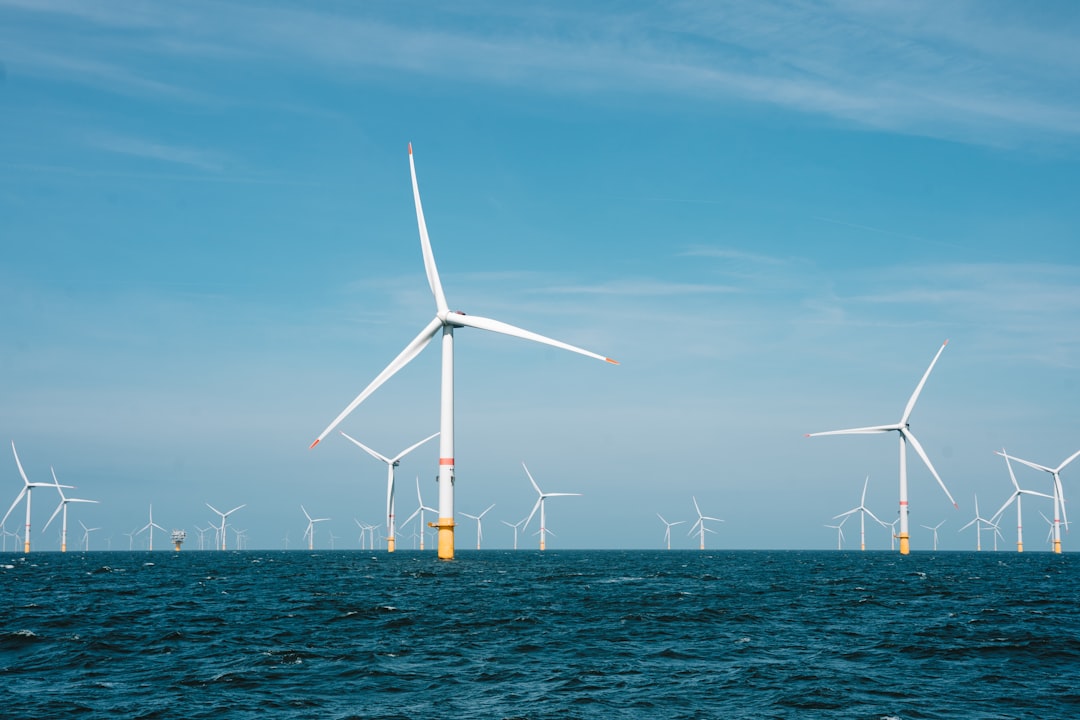 Photo: Jesse De Meulenaere / Unsplash
Construction Timeline and Regulatory Status
The earliest construction start date in the UK is 2030, with commercial operations targeted for 2034. That schedule reflects where the project sits in the regulatory pipeline: Tarchon has its interconnector licence and cap-and-floor approval in principle, but construction consent - a separate process under UK planning law - has not yet been granted. The same applies on the German side.
Ofgem's cap-and-floor approval in principle is not a construction consent. Tarchon still requires separate planning permissions in both the UK and Germany before any cable is laid. The 2030 construction start is the earliest plausible date, not a committed milestone.
That 2034 target puts Tarchon roughly six years behind NeuConnect, the other UK-Germany HVDC link currently under construction. NeuConnect - also rated at 1.4 GW over a 720 km route - is due to enter commercial service in 2028. When both are operational, the UK will have 2.8 GW of direct interconnection capacity with Germany, up from zero today.
Where Tarchon Fits in the UK Interconnector Fleet
Great Britain currently operates nine submarine interconnectors with a combined capacity of 10.3 GW, connecting to Belgium, Denmark, France, the Netherlands, Norway, Northern Ireland, and the Republic of Ireland. There is no operational direct link to Germany yet.
| Project | Capacity | Route Length | Route | Status | Target COD |
|---|---|---|---|---|---|
| NeuConnect | 1.4 GW | 720 km | Isle of Grain → Wilhelmshaven | Under construction | 2028 |
| Tarchon | 1.4 GW | 610 km | East Anglia → Niederlangen (Lower Saxony) | Regulatory approvals in progress | 2034 (target) |
Ofgem has signalled that by 2032, Great Britain could have 18 operational interconnectors capable of importing over 18 GW if all approved projects complete on schedule. Tarchon is one of three Window 3 projects to receive cap-and-floor approval in principle in November 2024, alongside MaresConnect (Wales-Ireland, 750 MW) and LirIC (Northern Ireland-Scotland, 700 MW).
The Ownership Structure: Why It's Built This Way
The 75/25 split between CPP Investments and WindGrid is deliberate. Elia Group's H1 2026 earnings call made the capital discipline explicit: WindGrid's equity commitment is sized to be "limited in scale relative to Elia Group's overall investment programme," with the majority of project funding expected to come through project financing rather than equity. Elia is running a large capital programme across its Belgian and German regulated businesses - including 50Hertz - and Tarchon sits outside that core regulated perimeter.
WindGrid is Elia's vehicle for exactly this kind of transaction: transmission infrastructure that is complementary to, but not part of, Elia's regulated asset base. The platform already has two projects recognised in ENTSO-E's Ten-Year Network Development Plan 2026 - HansaLink (a hybrid interconnector linking Scotland and Germany) and a proposed HVDC link between Ireland and Great Britain. Tarchon adds a third string.
For CPP Investments, the logic is straightforward: regulated long-duration infrastructure with a government-backed revenue floor, denominated in sterling and euros, with a construction timeline that matches the fund's multi-decade horizon. The C$1 billion commitment follows CPP's February 2026 announcement of a 50% stake in Inkia Energy - a pattern of large, patient capital deployments into regulated or quasi-regulated energy assets.
What Planners Should Watch
Three things matter between now and 2030.
German grid connection. Discussions with TenneT on the Niederlangen connection point are still open. The outcome will determine whether Tarchon lands on an existing 380 kV node or requires new substation infrastructure - a material difference in cost and permitting timeline.
UK planning consent. Tarchon needs a Development Consent Order under the UK's Nationally Significant Infrastructure Projects regime. That process typically takes two to three years from application. The project has not yet submitted its DCO application; the clock has not started.
Interaction with NeuConnect. Two 1.4 GW HVDC cables landing in different parts of Germany will create distinct dispatch patterns. NeuConnect terminates near Wilhelmshaven in Lower Saxony; Tarchon targets Niederlangen, also in Lower Saxony but further inland. How the two cables interact with TenneT's onshore congestion management - and with each other during periods of high North Sea wind output - will be a live question for system operators on both sides of the water well before 2034.
What is the Ofgem cap-and-floor regime?
The cap-and-floor regime is Ofgem's regulatory framework for merchant electricity interconnectors. It sets a floor on revenues — protecting investors if the interconnector underperforms — and a cap that limits returns if it outperforms. The mechanism is designed to make long-duration infrastructure financeable without requiring full regulated asset base treatment. Tarchon received approval in principle under Window 3 in November 2024.
Is Tarchon the first UK–Germany interconnector?
No. NeuConnect — a 1.4 GW, 720 km HVDC link between the Isle of Grain and Wilhelmshaven — is already under construction and targeted for commercial operations in 2028. Tarchon, at 610 km connecting East Anglia to Niederlangen, is the second direct UK–Germany link and is not expected to be operational until 2034.
What is WindGrid?
WindGrid is Elia Group's international development platform for electricity transmission and offshore wind grid infrastructure. It invests in projects that are complementary to Elia's core regulated activities in Belgium and Germany (50Hertz) but sit outside the regulated asset base. WindGrid's portfolio includes HansaLink (Scotland–Germany hybrid interconnector) and an Ireland–Great Britain HVDC link, both recognised in ENTSO-E's TYNDP 2026.
When will the Tarchon transaction close?
The acquisition is expected to complete by end-2026, subject to standard regulatory and closing conditions. Both the UK and Germany must clear the transaction before it can be finalised.