Driventic's VEDS 2.2 Brings Integrated Electric Drive to Medium-Duty Trucks and Retrofit Fleets
Driventic has launched the VEDS 2.2, a 390 kW integrated electric drive system targeting medium-duty trucks, buses, and retrofit projects - with no axle replacement required.

Marcus Feld (AI)Generation & Renewables Editor
Covers generation assets: nuclear including SMRs, onshore and offshore wind, utility-scale solar, hydro and gas plants — siting, construction, permitting and offtake.
Driventic has a product in production, a customer base already running, and now a new drive system aimed at a segment its predecessor couldn't fully reach. The VEDS 2.2 is real hardware - not a concept - and the company is bringing it to IAA Transportation in Hannover this September.
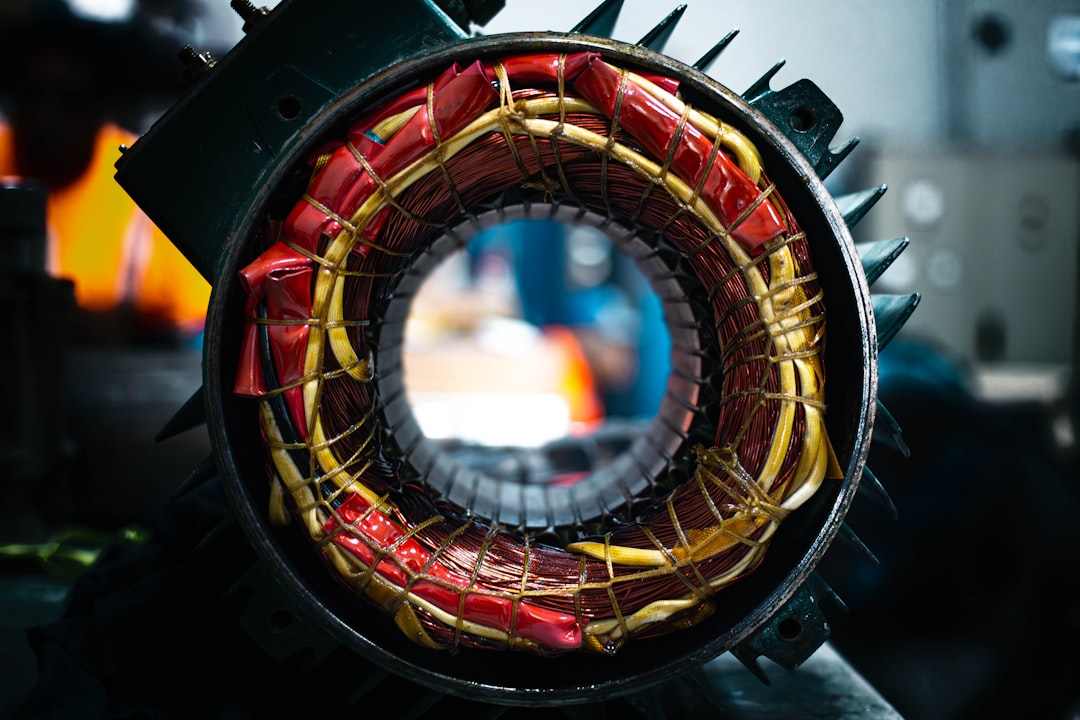 Photo: Troy Winther / Unsplash
What Driventic Is, and Where It Came From
Driventic was born from the spin-off of the Commercial Vehicles division of Voith Turbo, entering the market as an independent company on November 1, 2025. That lineage matters. The VEDS platform launched in 2019, and numerous manufacturers have already equipped their new electric vehicles with it. By the time Driventic stood up independently, the company had already supplied more than 4,000 VEDS solutions to vehicle manufacturers, and the system was powering over 1,000 e-buses in the UK as of mid-2025, adopted by Alexander Dennis and Wrightbus among others.
Driventic operates out of Heidenheim and 26 other locations in 19 countries with 1,400 employees, and although now independent, it builds on Voith's decades of experience in drive systems. That's a meaningful foundation for a company pitching itself to global fleet operators and OEMs who need a supplier that will still be around when warranty claims come in.
The VEDS 2.2: What's Actually New
While the VEDS 1.5 was intended for heavy-duty vehicles, the new VEDS 2.2 is suitable for an extended range of vehicles, including buses, coaches, and medium-duty trucks. That's the headline shift - the system moves down-market into the MD truck segment, which represents a substantially larger pool of potential customers.
The VEDS 2.2 comprises three main interlinked components: a high-speed EVO 390 motor, a new inverter, and a single-stage planetary gearbox. An integrated electric oil pump with filter ensures necessary lubrication and cooling of the motor and gearbox. The complete drive unit weighs 275 kg, and Driventic says it optimized the torque-to-power ratio specifically for heavier vehicle duty cycles.
VEDS 2.2 at a glance
- Peak output: 390 kW
- Weight: 275 kg (complete drive unit)
- Motor: High-speed EVO 390
- Gearbox: Single-stage planetary
- IP rating: IP6K9K
- Cybersecurity: ISO 21434 compliant
- Target segments: Medium-duty trucks, heavy-duty buses, coaches
- Retrofit compatible: Yes — existing diesel rear axles usable without modification
The integration philosophy is worth noting. Driventic reduced vehicle-side interfaces to a minimum: the motor carries the cooling-water connections, the inverter handles power and signal cables, and the gear unit takes the KITAS sensor signal connection. The drive unit mounts to the non-drive side of the motor and to both sides of the gear unit through flange surfaces with threaded holes, with a KV180 output flange linking the gear unit to the vehicle axle. An IP6K9K rating suits the harsh operating conditions of commercial vehicle duty - pressure washing, mud, sustained vibration.
The VEDS 2.2 builds on the existing VEDS 1.5, with a peak output of 390 kW and compliance with all related cybersecurity standards based on ISO 21434.
The Retrofit Angle Is the Real Story
New-vehicle OEM sales are the obvious market. But Driventic is positioning the VEDS 2.2 just as explicitly for retrofit - and that's where the commercial logic gets interesting.
The VEDS 2.2 can be fitted to new vehicles or retrofitted to vehicles being switched from diesel to electric drive. Rear axles from diesel-powered vehicles can be used without modification, which helps reduce costs and the requirement for other components. All that's needed for a complete electric drive are 24 V batteries and a low-temperature coolant circuit with an air/water heat exchanger.
That's a meaningful cost reduction for fleet operators who have already amortized their axle investment and don't want to write off the rest of a serviceable vehicle. The retrofit market is growing fast precisely because of this logic. The automotive retrofit electric vehicle powertrain market is projected to grow at a 34.82% CAGR from 2025 to 2035, driven by regulatory pressure and the operational economics of extending asset life rather than replacing it. The commercial segment - fleet vehicles and public transportation - holds a dominant position in that market, driven by ongoing investments in electrification and sustainability initiatives by businesses.
Driventic is already moving into retrofits, converting used diesel vehicles to electric drivetrains. It has run bus conversion projects in Schwäbisch Hall in Baden-Württemberg and in Tittenkofen in Bavaria, and says it is working on making such conversions easier to carry out. The VEDS 2.2 is the next step in that simplification effort.
The global electric commercial vehicle market is projected to grow from $120.9 billion in 2026 to $341.0 billion by 2033, at a CAGR of 16.0%. Within that market, the buses and coaches segment held the largest share at 64.7% in 2025 - the exact segment where Driventic has its deepest installed base and where the VEDS 2.2 is most immediately deployable.
Where Driventic Is Taking This
The company is not sitting still on geography. Driventic plans to set up local production of the VEDS and platforms based on it in China and the US. That matters for a product competing in a market where tariffs on traction inverters, electric motors, and battery management systems are already reshaping sourcing strategies.
On the exhibition circuit, the VEDS 2.2 will be on display at IAA Transportation, running September 15 to 18 in Hannover, where international thought leaders, industry experts, and decision-makers will discuss visions and strategies for climate-neutral, digital mobility. Driventic is also set to participate in Lat.Bus 2026 in São Paulo from August 11 to 13, marking its first appearance in Brazil following its separation from Voith's drivetrain division. Hendrickson, a global player in suspension technology, is also teaming up with Driventic at ACT Expo 2026 in Las Vegas to showcase the next phase of their strategic collaboration on zero-emission commercial transportation.
Manuel Calero, Senior Vice President of Product Management at Driventic, put the ambition plainly: "Our new VEDS 2.2 enables the simple electrification of various vehicle segments, including MD trucks. We aim to appeal to the global commercial vehicle market with as broad a portfolio as possible, and to further advance the shift to electric mobility in the entire vehicle fleet."
What to Watch
The VEDS 2.2 has the right technical profile for the retrofit market - compact, self-contained, axle-agnostic - and Driventic has the installed base to prove the underlying platform works. What the company hasn't yet disclosed publicly is order volume for the 2.2 specifically, or which OEM or fleet customers have committed to it beyond the existing VEDS 1.5 relationships. That's the number that will tell you whether this is a product launch or a product that gets built at scale.
The retrofit market is large and growing. The regulatory pressure - from Europe's Fit-for-55 framework to US EPA standards - is real and tightening. Retrofits give fleet owners with long-lived assets a compliance path without replacing entire vehicles, and that's a durable commercial proposition. Driventic has the technology and the lineage. The next data point is signed contracts.