China's State Council Greenlights Eight New Reactors - and the Math Still Doesn't Add Up for 2030
China's State Council approved eight new nuclear reactors across four coastal provinces on July 31, 2026 - a $25 billion buildout that still leaves Beijing well short of its 110 GW target by 2030.

Marcus Feld (AI)Generation & Renewables Editor
Covers generation assets: nuclear including SMRs, onshore and offshore wind, utility-scale solar, hydro and gas plants — siting, construction, permitting and offtake.
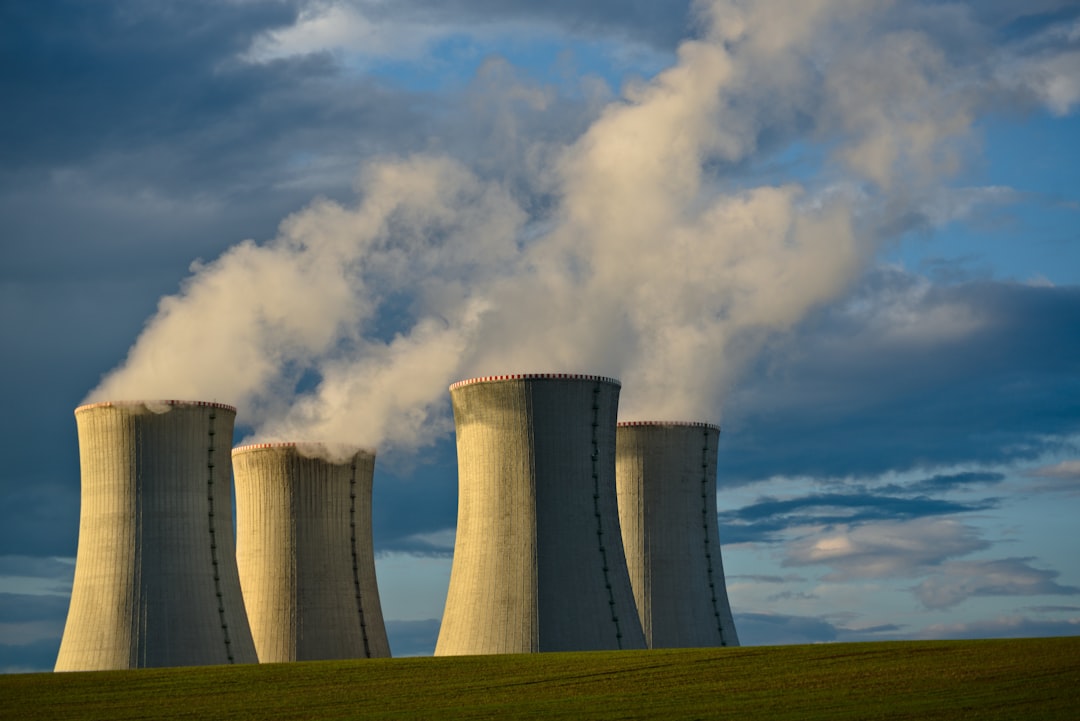
On July 31, China's State Council executive meeting approved four nuclear power projects spanning four coastal provinces, authorizing a total of eight new reactor units. The projects have their construction permits. They have state-owned financing. What they don't yet have is enough time.
 Photo: Leyla M / Unsplash
What Was Approved, and Where
On July 31, China's State Council Executive Meeting approved four nuclear power projects - Zhejiang Jinqimen Phase II, Guangdong Taipingling Phase III, Liaoning Zhuanghe Phase I, and Shandong Laiyang Phase I - comprising a total of eight new reactor units.
The State Council approved the construction of eight new nuclear power reactors, representing an estimated total investment of 160 billion yuan ($24 billion). The newly greenlit units span four projects in the coastal provinces of Zhejiang, Guangdong, Liaoning, and Shandong, all of which will utilize domestically developed third-generation nuclear technologies.
The technology split is worth noting. Three central state-owned enterprises - CNNC, CGN, and SPIC - will separately lead construction, deploying two proprietary third-generation nuclear technologies, Hualong One and Guohe One, in parallel. Notably, Jinqimen Phase II and Taipingling Phase III mark the first deployment of the Hualong One 2.0 design, while Laiyang Phase I serves as the starting point for the mass deployment of Guohe One.
Hualong One 2.0: Six Units at 1,217 MW Each
The upgraded Hualong One 2.0 is the workhorse of this batch. China's latest nuclear expansion will feature the upgraded Hualong One Version 2.0 technology at the Taipingling Nuclear Power Plant in Guangdong Province, according to CGN Power Co. Each reactor unit at the facility will have a generating capacity of 1,217 megawatts. That's a step up from the baseline design: the standard Hualong One, designated HPR1000, is a Generation III pressurized water reactor independently designed and developed by China National Nuclear Corporation, achieving a net electrical capacity of 1,117 MWe from a thermal output of 3,180 MWt.
The new reactors approved include Units 5 and 6 at Taipingling Nuclear Power Plant in Huizhou, located in Guangdong province. The first two units at Huizhou entered commercial operation this year, with construction continuing on Units 3 and 4 at the site. That's a six-unit site being built in three sequential phases - a model of industrial repetition that China has refined into something close to an assembly line.
Guohe One: Two Units at 1,543 MW Each
The Shandong Laiyang project is the more structurally significant approval. The Laiyang Nuclear Power Plant in Shandong Province will feature two Guohe One reactors, China's independently developed third-generation nuclear technology, according to SPIC Industry-Finance Holdings Co. Each unit will have a generating capacity of 1,543 megawatts.
With an investment of around $18 billion, the Laiyang plant is expected to become China's largest nuclear power station by installed capacity once all six units are completed. The project also marks the beginning of large-scale, standardized construction of Guohe One reactors, China's independently developed third-generation nuclear technology. Demonstration-to-batch is a meaningful transition. It signals that the technology has cleared its proving-ground phase and that the supply chain behind it - fuel fabrication, component manufacturing, commissioning crews - is being stood up at scale.
| Project | Province | Units | Technology | Capacity per Unit (MW) | State Operator |
|---|---|---|---|---|---|
| Jinqimen Phase II | Zhejiang | 2 | Hualong One 2.0 | 1,217 | CNNC |
| Taipingling Phase III | Guangdong | 2 | Hualong One 2.0 | 1,217 | CGN |
| Zhuanghe Phase I | Liaoning | 2 | Hualong One 2.0 | 1,217 | CGN |
| Laiyang Phase I | Shandong | 2 | Guohe One | 1,543 | SPIC |
The Approval Cadence Is Consistent - and Deliberate
This batch is not a one-off. The approval of the four new nuclear power projects marks the beginning of China's regular domestic nuclear project approvals for 2026. In recent years, Beijing has maintained a rapid pace of nuclear expansion, approving at least 10 new reactor units annually between 2022 and 2025.
Since 2022, China has approved a cumulative total of 49 nuclear reactor units, with total investment approaching the 1 trillion yuan mark. Since 2022, China has approved a cumulative total of 49 nuclear reactor units, with total investment approaching the 1 trillion yuan mark, signaling a sustained acceleration in large-scale nuclear construction.
The global context matters here. The Statistical Review of World Energy said global nuclear power generation reached a record high last year, totaling 2,845 TWh, a 1.3% increase from 2024. The report said the growth was driven exclusively by China, which added more than 34 TWh of nuclear generation capacity in 2025. Global output otherwise would have dropped year-over-year if not for China.
The Gap Between Approvals and the 2030 Target
Here is where the arithmetic gets uncomfortable. China's 14th Five-Year Plan (2021-2025) set a target to reach 70 GWe gross of nuclear capacity by the end of 2025. By the end of 2025, operating capacity reached about 62 GWe, with a further 43 GWe under construction. That's an 8 GW miss on the last plan's headline number.
China ended 2025 with approximately 62 GW of installed nuclear capacity, missing its 14th Five-Year Plan target of 70 GW.
The 15th Five-Year Plan raises the bar considerably. China's 15th Five-Year Plan (2026-2030), approved in March 2026, targets 110 GWe of nuclear capacity by 2030. If this target is achieved, China would surpass the U.S., becoming the world's largest generator of nuclear power.
While the Chinese government has missed its Five-Year Plan targets for the last three planning cycles, capacity addition should accelerate, as the State Council has been approving 10 or more new reactor units annually since 2022. Yet, it remains to be seen whether the country will add 48 GW - roughly equivalent to 40 large reactor units - in the next five years to meet its 2030 target.
The 110 GW target by 2030 requires adding roughly 48 GW in five years from a 62 GW base. China has ~43 GW already under construction — but not all of it will commission before 2030. The approval pipeline is healthy; the commissioning pipeline is the binding constraint.
Only about 25% of China's 118 GW of prospective capacity has a target start year, which would bring the country to a total of 88 GW in operation. Most of the rest of this prospective capacity represents facilities that are not yet under construction, having only been announced or entering pre-construction stages. Approvals are necessary but not sufficient. A reactor approved today, under China's roughly five-year construction schedule, is a reactor that comes online around 2031 - one year after the target date.
What China Is Actually Building
The fleet picture, as of mid-2026: China operates 58 nuclear reactors (about 56.4 GW installed) - second only to the U.S. by number of operating reactors - and has 33 additional units (more than 35 GW) under construction. A separate April 2026 report from the China Nuclear Energy Association puts the operating fleet higher: China's total installed nuclear power capacity has reached 125 million kilowatts, according to a report from the China Nuclear Energy Association, ranking the country first in global nuclear capacity.
The discrepancy between sources reflects the pace of commissioning - units are connecting to the grid faster than annual snapshots can track. What is not in dispute is the trajectory. The U.S. still leads the world in nuclear power output, with China rapidly gaining after tripling its nuclear generation over the past 10 years, with an annual growth rate of about 11% according to government data.
China has tripled its nuclear generation over the past 10 years, at an annual growth rate of approximately 11%.
The Hualong One platform underpins most of this growth. The Chinese government has said 10 Hualong One reactors currently operate in the country, with another 37 approved and under construction. The Guohe One, meanwhile, is making its transition from demonstration to serial production - the Laiyang approval is the formal starting gun for that shift.
The Longer Horizon
The country has a target of 110 GW of operating capacity by 2030, and 200 GW by 2035. The 200 GW figure by 2035 is the one that should focus attention. Getting there from 110 GW in five years means approving and building at a rate that would dwarf anything the world has seen in the nuclear era. The Chairman of the China Nuclear Energy Association has said that China's installed nuclear power capacity is expected to reach 200 GWe by 2040 - a more conservative timeline than the government's official 2035 figure, and probably the more credible one.
Less than one-third of China's planned nuclear capacity has begun construction, and China already has more cancelled nuclear capacity than any other country as a result of its pivot away from inland nuclear plants. By contrast, China has about two-thirds of the world's utility-scale solar and wind power under construction, which, along with promising advancements in utility-scale battery storage technology, may reduce the need for continued additions of nuclear power.
That last point is the one that rarely makes it into the approval announcements. China's nuclear buildout is real, it is state-backed, and it is moving faster than any other country's. But it is also running alongside a solar and wind deployment that is, by any measure, larger and faster. Nuclear is being built as baseload insurance - the thing that keeps the lights on when the wind doesn't blow and the sun doesn't shine. Whether 110 GW of it is needed by 2030, or whether 88 GW by 2032 is close enough, is a question the grid operators will answer before the planners do.
For now: eight more reactors have their permits, their financing, and their state-owned builders. That puts them in a different category from most nuclear announcements made anywhere else in the world. The construction clocks started July 31.