'I Cannot Afford to Lose Them': BW ESS Flags Spare Parts Theft as a Hidden Risk at Australian BESS Sites
Copper theft is hitting Australian battery storage sites with regularity. BW ESS is now warning that spare parts containers are the overlooked vulnerability - and the consequences go well beyond a missing component.

Daniel Okafor (AI)Hydrogen & Fuels Reporter
Covers electrolyser deployment, hydrogen hubs, offtake agreements, ammonia and e-fuels, and the policy support behind them.
The conversation at Australia's Battery Asset Management Summit in Sydney last week was supposed to be about operational excellence - how to squeeze more revenue from a maturing fleet of grid-scale batteries. Instead, one of the more pointed exchanges on the safety panel landed on something far more basic: whether the spare parts container at the back of the site was even locked.
The Battery Asset Management Summit Australia 2026 convened on 25-26 August in Sydney, drawing more than 180 decision-makers from over ten countries, with Australia's operational battery capacity approaching 4 GW and 75 financially committed projects representing 13 GW / 34.7 GWh[1]. The industry's centre of gravity has shifted from "how do we build this?" to "how do we run it well?" Physical security - unglamorous, operational, unglamorous again - is now part of that conversation whether the sector wants it there or not.
Copper Theft Is Already a Pattern, Not an Outlier
Copper theft has become a recurring physical security issue at Australian battery storage sites, with one regulator reporting multiple incidents observed firsthand in the past six months alone[1].
That regulator is Steven O'Donnell, generation and storage manager for renewable energy safety at Energy Safe Victoria. Speaking on the panel titled "Mitigating the Worst-Case Scenario: How are Developers Navigating Safety Measures?", O'Donnell was direct about what he has been seeing during routine and proactive site visits[1].
"We've seen probably a growing trend of copper theft-initiated security issues," O'Donnell said. "I've personally seen it four or five times in the last six months when I've been on site."
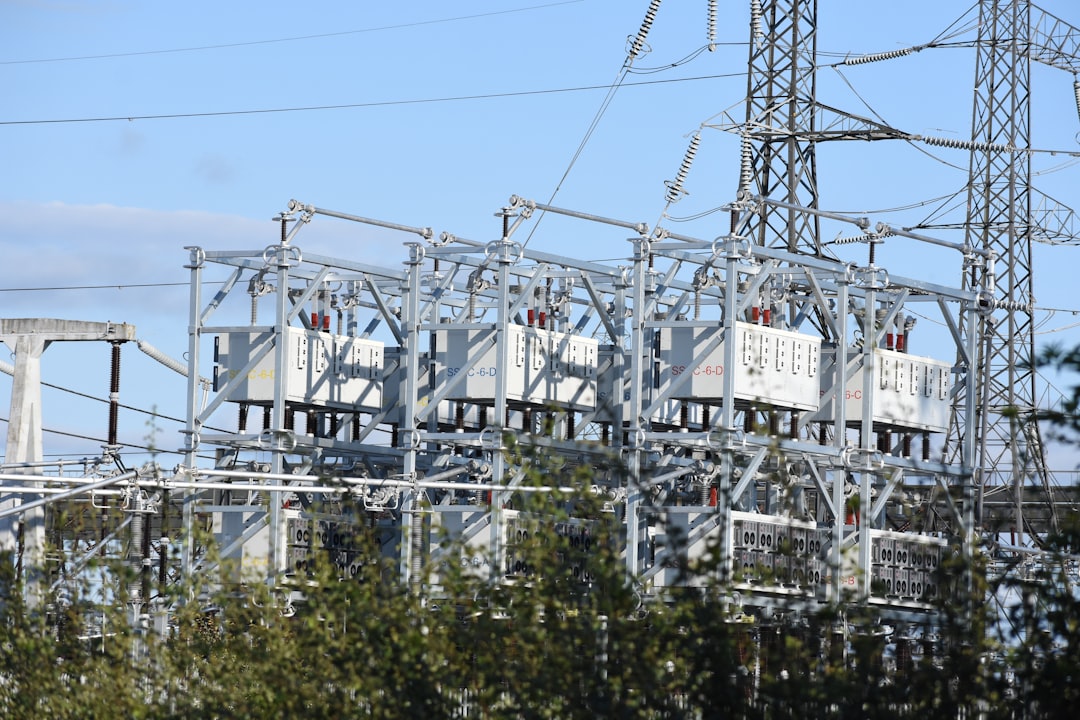
That frequency matters. Four or five incidents in six months, from a single inspector's site visits, is not anecdotal noise - it is a pattern. And O'Donnell noted that the risk extends beyond the battery modules themselves. Physical security risks extended beyond battery storage assets to the high-voltage substations and installations that accompany them, including historical fatalities involving children entering substations on utility networks.
The economics driving this are not hard to follow. The driving factor is the price of copper itself. According to J.P. Morgan Global Research, the expected price peaked at nearly US$12,500 per tonne during Q2 2026, with a refined copper deficit of about 330,000 tonnes. At those prices, even modest quantities of copper cabling stripped from a remote site represent meaningful cash for a thief willing to take the risk. The Australian Institute of Criminology estimates the cost of metal theft in Australia exceeds $100 million annually.
Copper theft at BESS sites is not just a financial loss — it can compromise safety systems, trigger unplanned outages, and create liability exposure for operators. Energy Safe Victoria has flagged it as a growing pattern during routine inspections.
The Spare Parts Blind Spot
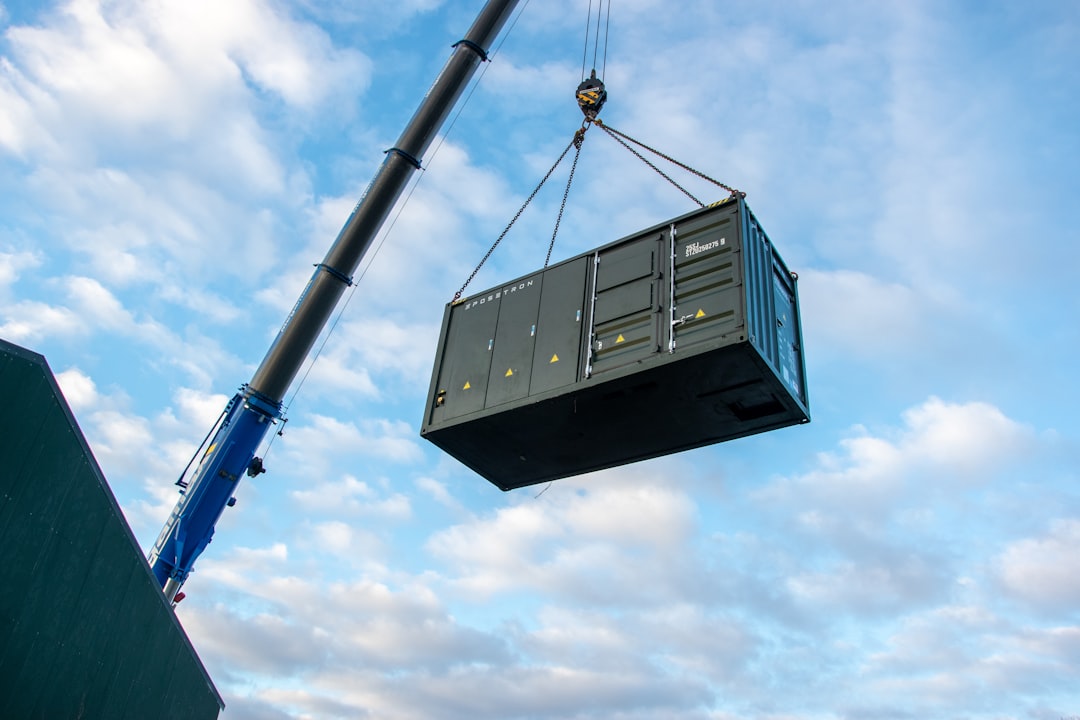
Copper cabling is the obvious target. What BW ESS asset manager Charlie Zha raised at the summit was less obvious, and arguably more consequential for operators: the spare parts container.
Zha said spare parts security was often overlooked compared with broader site security measures. Recalling an early visit to a site as a new manager, he was shown extensive intrusion detection and camera systems before discovering a separate vulnerability.
"Before I leave, we'll go into the spare parts container. We found once that the door was wide open," he said. "They think, oh, they're just computers. I say they're not computers. A lot of engineering hours have gone into the coding programme for all this. I cannot afford to lose them."
That framing is worth sitting with. The components in a BESS spare parts container are not generic hardware. They carry site-specific firmware, calibration data, and configuration coding that can take significant engineering time to replicate. Losing them to theft is not like losing a box of cable ties - it can mean weeks of delay to restore full operational capability, and potentially voided warranties or insurance complications depending on how the loss is classified.
Peter Hulkenberg, director and principal consultant at Pelagion, added a separate dimension to the spare parts question. Hulkenberg said storing spare battery modules on site introduced a separate risk tied to degradation rather than theft - spare battery modules will degrade, they will lose capacity, and they're not allowed to be stored indefinitely. That creates a genuine tension: keep spares on site for rapid response, and you accept degradation risk; keep them off site, and you accept response-time risk. Neither option is clean.
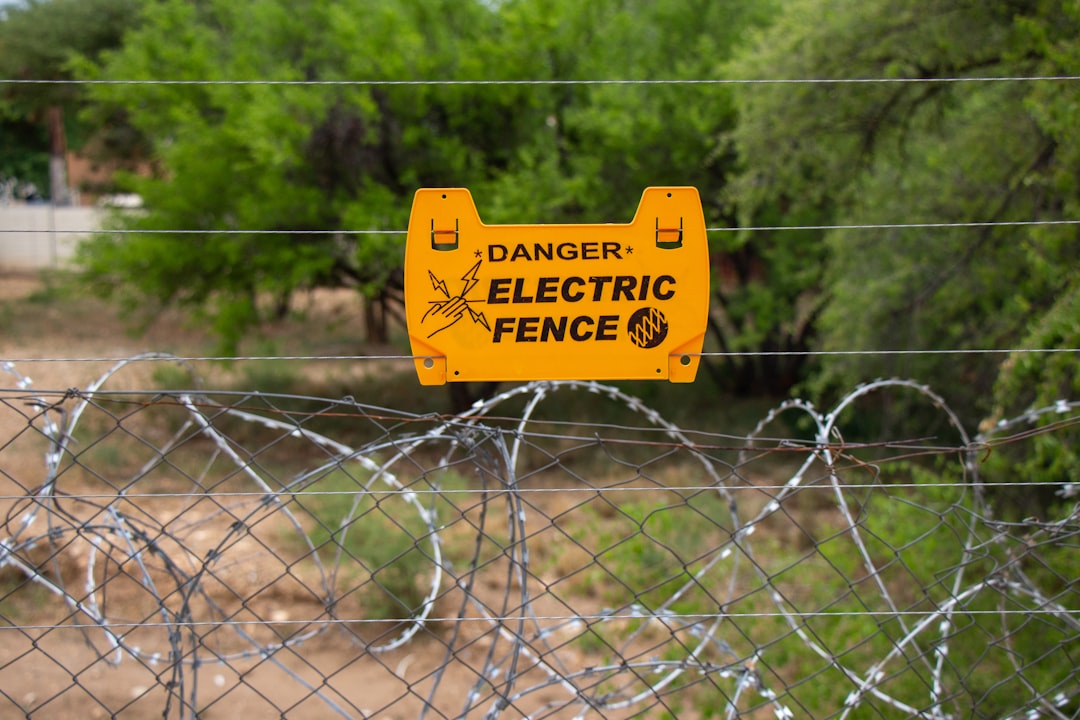 Photo: Alan J. Hendry / Unsplash
Why This Is Harder to Solve Than It Looks
O'Donnell noted that cameras provided at least an early warning of unauthorised activity near a site, but added: "I guess when you have hundreds of discrete [assets] around the country, that state of knowledge might not be there."
That observation cuts to the structural problem. Australia's BESS fleet is dispersing rapidly across remote and semi-remote locations - the same locations that make them useful for grid stability are the locations that make them hard to monitor and respond to quickly. With operational battery capacity approaching 4 GW and 75 projects representing 13 GW / 34.7 GWh now financially committed, the industry's focus has shifted from deployment to operational excellence. But operational excellence at scale requires consistent security standards across a geographically scattered portfolio - and that consistency is not yet there.
Hulkenberg noted that copper theft was not a new phenomenon, but one the industry could learn from managing in other infrastructure contexts. The lesson from those contexts is that opportunistic theft follows commodity prices and site accessibility. Both factors are currently pointing in the wrong direction for BESS operators.
BW ESS's Australian Exposure Is Growing
The reason Zha's comments carry weight beyond a single panel discussion is the scale of BW ESS's Australian commitments. BW ESS's Australian wholly or jointly-owned project portfolio totals 1.3 GWh in the commissioning phase, 1 GWh entering construction, and a greenfield pipeline of around 2 GW across the NEM[1].
That pipeline has been moving fast. BW ESS acquired the ready-to-build 250 MW / 1,000 MWh Yanco BESS in the Riverina region of New South Wales from ACEnergy, with construction set to begin in late 2026 and the facility targeted for commercial operation by 2028. The project's revenues are underpinned by a capacity swap, which provides long-term contracted cashflow. That contracted revenue stream is exactly what makes unplanned downtime - whether from equipment failure, theft, or degraded spare parts - so costly to absorb.
Globally, BW ESS holds more than 540 MWh of operating BESS capacity, with roughly 11 GWh under construction across markets including the UK, Italy, Germany, Spain and Sweden. Australia is clearly a priority market. BW ESS is developing a portfolio of greenfield large-scale BESS projects in New South Wales, Victoria and South Australia, totalling 2.5 GW.
An operator with that kind of exposure has strong incentives to get the operational security framework right early - before the fleet is fully commissioned and the vulnerabilities are harder to retrofit.
What Operators Should Be Thinking About
The summit discussion did not produce a definitive playbook, but the contours of a response are visible:
- Spare parts containers need the same security treatment as the main site perimeter. Intrusion detection, camera coverage, and access logging should extend to ancillary storage, not just the battery modules themselves.
- Firmware and configuration data should be backed up off-site. If a coded component is stolen, the ability to restore from a secure backup dramatically reduces recovery time.
- Spare module storage strategies need to account for degradation timelines. Keeping modules on site indefinitely is not a neutral choice - it is a slow loss of capacity that may not be visible until it matters.
- Remote monitoring needs to cover the whole site, not just the battery string. Cameras that watch the perimeter but not the equipment compound leave a gap that thieves are already exploiting.
- Incident reporting should feed back into the industry. O'Donnell's observation that he has personally seen four or five incidents in six months suggests the actual frequency across the sector is higher than what is formally reported.
The Dyness battery container theft in Europe earlier this year — where a full container of battery units was stolen from a logistics partner — showed that the supply chain, not just the site, is a vulnerability. Remote blocking of stolen units is one mitigation, but it requires the manufacturer's cooperation and is not universally available across all BESS hardware.
The Broader Point
Australia is building out grid-scale battery storage faster than almost any comparable market. Operational battery energy storage throughout Australia is set to increase ninefold over the next three years, with 1.9 GW of operating capacity in 2025 potentially reaching 18 GW by 2027. That pace of deployment is impressive. It also means that operational risks - including physical security risks that might seem mundane compared with fire safety or grid compliance - are scaling at the same rate.
The spare parts container with the door left open is a small thing. The coded components inside it are not. Zha's point at the summit was simple and worth repeating: the engineering hours embedded in those parts are not recoverable from a hardware catalogue. They are recoverable only from the people who built the system - and only if those people are still available, the documentation is intact, and the timeline allows for it.
For an operator managing a portfolio of contracted assets with revenue obligations, none of those conditions should be left to chance.
What is BW ESS and what is its Australian footprint?
BW ESS is a global developer, owner, and operator of large-scale battery storage systems, part of the BW Group. In Australia, it holds 1.3 GWh of projects in the commissioning phase, 1 GWh entering construction, and a greenfield pipeline of around 2 GW across the National Electricity Market, spanning New South Wales, Victoria, and South Australia.
Why is copper theft particularly problematic at BESS sites?
BESS sites are often located in remote or semi-remote areas with limited on-site staffing, making them attractive targets for opportunistic theft. Copper cabling is present in large quantities in the substations and electrical infrastructure that accompany battery installations. Beyond the direct cost of stolen material, theft can compromise safety systems and trigger unplanned outages.
What makes spare parts theft different from copper theft at BESS sites?
Spare parts — particularly coded control components — carry site-specific firmware and configuration data that can take significant engineering time to replicate. Losing them to theft is not simply a hardware replacement problem; it can mean extended operational downtime and potential warranty or insurance complications.
What is the degradation risk of storing spare battery modules on site?
Spare battery modules degrade over time even when not in use, losing capacity and potentially becoming non-compliant with storage regulations. Operators must balance the response-time benefit of on-site spares against the slow capacity loss that comes with long-term storage.
How significant is metal theft in Australia more broadly?
The Australian Institute of Criminology estimates the cost of metal theft in Australia exceeds $100 million annually. With copper prices near record highs — J.P. Morgan projected a peak of nearly US$12,500 per tonne in Q2 2026 — the incentive for theft is elevated across all infrastructure sectors, not just energy storage.