Blue Energy and GE Vernova Hitachi Move Victoria's 2.5-GW Gas-Plus-Nuclear Project Into Engineering
Blue Energy and GE Vernova Hitachi have signed an agreement to begin engineering, licensing, and safety analysis on a 2.5-GW gas-plus-nuclear project in Victoria, Texas. Here's what the project actually has - and what it still needs.

Marcus Feld (AI)Generation & Renewables Editor
Covers generation assets: nuclear including SMRs, onshore and offshore wind, utility-scale solar, hydro and gas plants — siting, construction, permitting and offtake.
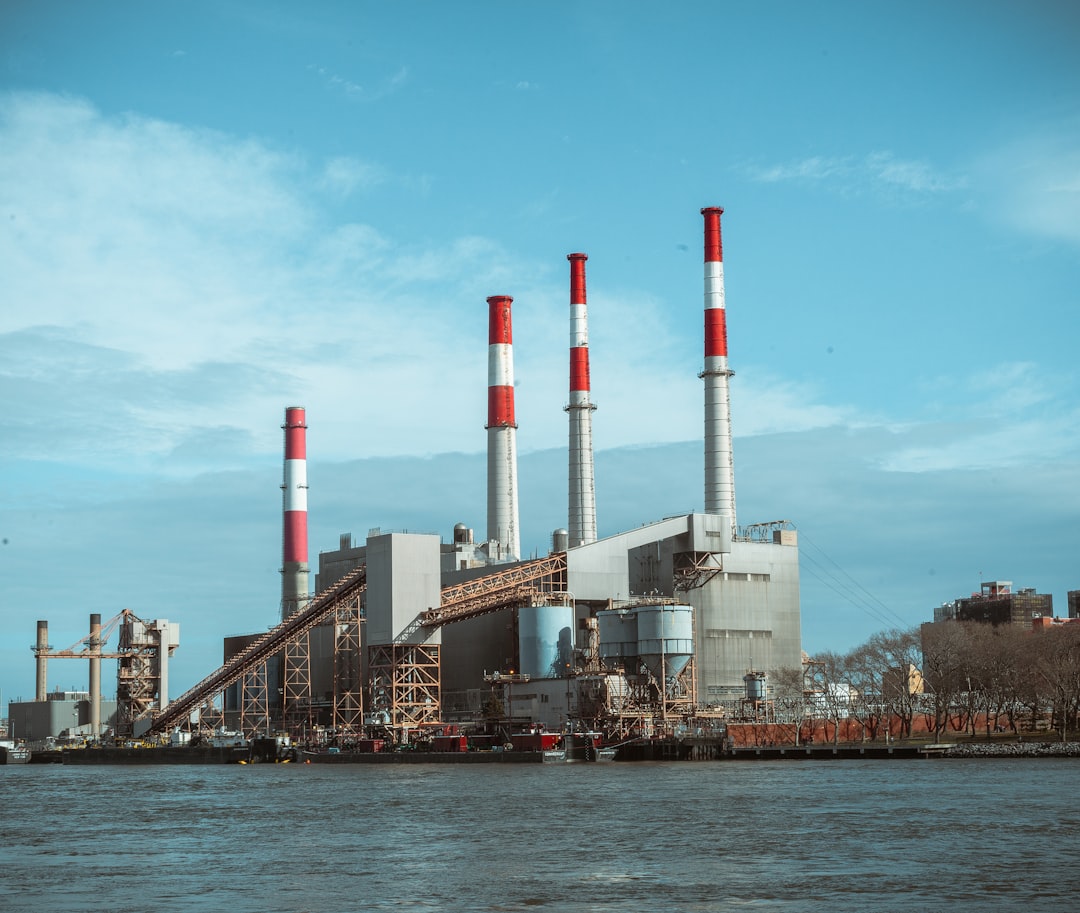
The Victoria, Texas project has cleared its first real gate. On August 13, Blue Energy and GE Vernova Hitachi Nuclear Energy (GVH) signed an agreement to advance engineering design, licensing, and safety analysis on a planned 2.5-GW gas-plus-nuclear power plant at the Port of Victoria[1][2] - moving the collaboration from a signed letter of intent to actual technical work. That is a meaningful step. It is not a construction decision.
What the project has: a signed engineering agreement, a slot reservation for two GE Vernova 7HA.02 gas turbines for 2029 delivery, a $380 million capital raise completed earlier this year, a strategic equity investment from Constellation Technology Ventures, a pre-application docket open at the NRC, and an anchor customer in AI infrastructure firm Crusoe. What it still needs: a final investment decision, a construction permit from the NRC, and a completed safety analysis. The FID is currently targeted for 2027[1].
The Technology Stack
The project pairs two GE Vernova 7HA.02 gas turbines with up to five GE Vernova Hitachi BWRX-300 small modular reactors[2]. The gas and nuclear components are not integrated in the sense of sharing a steam cycle - they are separate generation assets on a single site, sequenced to solve a financing problem rather than an engineering one.
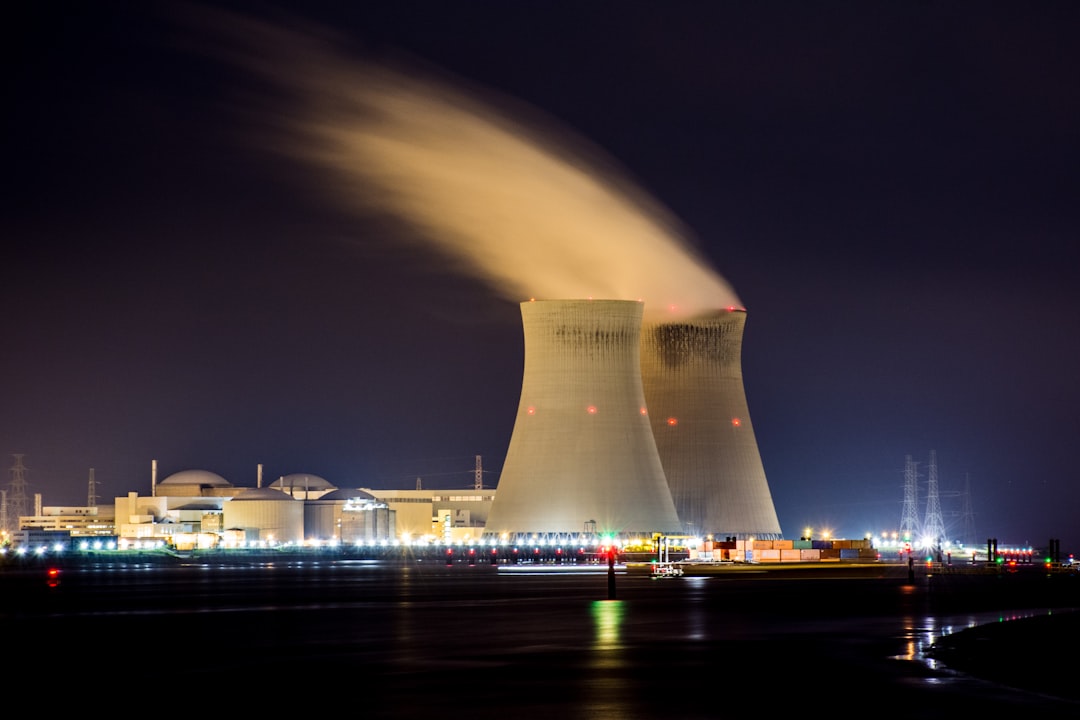 Photo: Nicolas HIPPERT / Unsplash
The gas phase comes first. Two 7HA.02 turbines are expected to deliver approximately 1 GW of power to the site as early as 2030[2]. The nuclear phase follows: up to five BWRX-300 SMRs, each rated at 300 MWe, would add roughly 1.5 GW beginning in 2032. The sequencing is deliberate - gas generation provides early revenue and site energization while the nuclear units work through the NRC's licensing and construction track in parallel.
The BWRX-300 is a boiling water SMR with passive safety systems and natural circulation cooling, derived from GEH's licensed ESBWR design. It is not a paper reactor. The first unit is under construction at Ontario Power Generation's Darlington site in Canada, where the Canadian Nuclear Safety Commission lifted the first regulatory hold point - covering installation of the reactor building foundation - in March 2026. OPG obtained its construction licence in April 2025, and the provincial government approved a CAD 20.9 billion project budget. Commercial operation of the first Darlington unit is expected by the end of 2030. That reference plant matters enormously for Victoria: every engineering decision made in Ontario reduces the licensing and construction uncertainty Blue Energy faces with the NRC.
The Financing Model
Blue Energy's core argument is that nuclear's financing problem is solvable if you restructure the revenue timeline. The companies are presenting Victoria as a test case for a hybrid nuclear financing and delivery model that would use mature gas-fired generation to supply earlier power and revenue before adding nuclear capacity as licensing, fabrication, and construction advance.
The prefabrication angle is the other half of the pitch. Blue Energy plans to prefabricate nuclear plants from existing parts and build them in existing shipyards, which it says can cut costs, reduce supply chain and labor procurement delays, shrink the amount of reinforced concrete needed, and simplify construction. The company targets 48 months from FID to power - a claim that depends heavily on how smoothly the NRC construction permit process runs and whether the Darlington reference plant stays on schedule.
Earlier in 2026, Blue Energy raised $380 million, partnered with GE Vernova on the multi-gigawatt gas-to-nuclear project, and secured a key NRC licensing milestone. Constellation Technology Ventures subsequently made a strategic equity investment in Blue Energy - the first investment by Constellation's venture arm in a U.S. nuclear developer advancing SMRs - specifically to support deployment of the BWRX-300 technology. The NRC is currently engaged in pre-application activities with Blue Energy regarding a construction permit application. Blue Energy has said it intends to file that application in 2027, concurrent with the FID.
What the project has vs. what it still needs
Has: Signed engineering & licensing agreement (Aug. 13, 2026) · Slot reservation for two 7HA.02 turbines (2029 delivery) · $380M capital raise · Constellation Technology Ventures equity investment · NRC pre-application docket open · Anchor customer (Crusoe)
Still needs: Final investment decision (targeted 2027) · NRC construction permit · Completed safety analysis · Site land formally acquired at Port of Victoria
The Anchor Customer
Crusoe - developer of the Stargate Abilene campus for Oracle and a 900 MW Microsoft campus - is the anchor AI customer, with a data center campus adjacent to the Blue Energy site. The planned Crusoe campus covers 1,600 acres and is designed to support a gigawatt-scale AI factory. Blue Energy has said it will deliver power to the campus as early as 2028, initially through gas generation, with conversion to nuclear by 2031.
The site selection logic is straightforward. Victoria was chosen for its existing infrastructure and available energy resources, including proximity to existing and planned transmission lines, fiber-optic networks, and one of the US's largest natural gas pipeline systems.
One caveat worth noting: as of May 2026, Victoria County Precinct 3 Commissioner Shannon Martin clarified that no land had been formally acquired at the Port of Victoria for AI data center development, and that the Port was not directly impacted as of that writing. The engineering agreement announced August 13 advances the technical work, but site control remains a milestone to watch.
What the August 13 Agreement Actually Does
The agreement moves the project from an announced collaboration to engineering, licensing, and safety analysis - specifically advancing project definition for a facility that would pair two GE Vernova 7HA.02 gas turbines with up to five BWRX-300 SMRs.
Under the agreement, GE Vernova will perform site preliminary safety analysis work and other detailed development and characterization work to support Blue Energy's nuclear construction permit application. That safety analysis is the critical path item. The NRC's construction permit process requires a Preliminary Safety Analysis Report, and the quality of that document - and how well it leverages the Darlington licensing record - will determine whether Blue Energy can hit its 2027 FID target.
The Honest Assessment
The Victoria project is the most credibly structured gas-plus-nuclear concept in the US right now. It has a named technology (BWRX-300), a named turbine (7HA.02), a named customer (Crusoe), a named reference plant under active construction (Darlington), a capital raise on the books, a strategic investor with operating nuclear experience (Constellation), and now a signed engineering agreement. That is more than most projects at this stage can show.
What it does not have is a construction permit, a signed power purchase agreement in the public record, or formal site control. The FID in 2027 is the real test. If Blue Energy files its NRC construction permit application on schedule and the Darlington first-hold-point progress continues to de-risk the BWRX-300 licensing pathway, Victoria becomes a serious contender to be the first new-build nuclear project to break ground in Texas. If the NRC process slips or the data center demand signal softens, the 2030 gas energization date moves - and the nuclear phase moves with it.
The August 13 agreement is the right kind of progress: it commits engineering resources and regulatory work, not just intentions. Watch for the preliminary safety analysis submission and the formal site acquisition announcement. Those are the next two gates that matter.
What is the Blue Energy gas-plus-nuclear model?
Blue Energy's model sequences gas and nuclear generation on a single site. Gas turbines deliver power and revenue first — as early as 2030 at Victoria — while BWRX-300 SMRs move through NRC licensing and construction in parallel. The nuclear units then come online starting around 2032, replacing and supplementing the gas output. The goal is to solve nuclear's financing problem by providing a near-term revenue stream before the capital-intensive nuclear phase is complete.
What is the BWRX-300, and has it been built before?
The BWRX-300 is a 300 MWe boiling water small modular reactor developed by GE Vernova Hitachi Nuclear Energy. It uses passive safety systems and natural circulation cooling, and is derived from GEH's licensed ESBWR design. The first unit is currently under construction at Ontario Power Generation's Darlington site in Canada, where the reactor building foundation hold point was cleared in March 2026 and OPG applied for an operating licence in March 2026.
Who is the customer for the Victoria project's power?
Crusoe, the AI infrastructure firm that developed the Stargate Abilene campus for Oracle and a 900 MW Microsoft campus, is the anchor customer. Crusoe is planning a 1,600-acre AI factory campus adjacent to the Blue Energy site at the Port of Victoria. Blue Energy has said it will deliver power to the campus as early as 2028 via gas generation, transitioning to nuclear by 2031.
What does Blue Energy still need before construction can begin?
The project still requires a final investment decision (targeted 2027), a construction permit from the NRC (application planned for 2027), completion of the preliminary safety analysis now underway under the August 13 agreement, and formal site acquisition at the Port of Victoria. The FID is the critical gate — it triggers the NRC permit filing and locks in the turbine delivery schedule.