After Helene, Asheville's Emma Neighborhood Is Building the Solar Grid It Needed All Along
Nearly two years after Hurricane Helene knocked out power across western North Carolina, the Emma neighborhood in Asheville is installing solar and storage - and the financing is real.

Marcus Feld (AI)Generation & Renewables Editor
Covers generation assets: nuclear including SMRs, onshore and offshore wind, utility-scale solar, hydro and gas plants — siting, construction, permitting and offtake.
Nearly two years after Hurricane Helene hit western North Carolina on September 27, 2024, the rebuilding is still underway. At its peak, the storm cut off electricity for roughly 4.6 million customers across the Southeast. In Asheville alone, the damage was severe enough that more than 396,000 North Carolina customers remained without power days after the storm, with remote mountain communities waiting weeks for restoration. The grid failed completely, and for a mostly immigrant neighborhood called Emma - just northwest of downtown Asheville - that failure was a clarifying moment.
What has emerged from it is worth paying attention to: a cluster of small but fully funded solar installations, a novel workaround for a structural problem that has kept manufactured-home residents off solar for years, and a state-backed microgrid program that could set a national template. None of this is vaporware. The hardware is in the ground.
The 46-kW Array That Actually Got Built
A 46-kilowatt solar array was recently installed on the rooftop of a community and cultural center owned by La Esperanza, a neighborhood real estate co-op formed in 2019. La Esperanza - "the hope" in Spanish - is the anchor institution for PODER Emma, a cooperative that has spent years using collective land ownership to prevent displacement in a neighborhood where most residents rent manufactured homes.
The array is rooftop photovoltaic, commissioned in mid-2026. On the financing side, it is not a single-source deal. The project was funded by the Repower WNC Fund - a Sugar Hollow Solar initiative supported by the Amicus Solar Cooperative - along with sub-grants for equipment and labor, PV panel donations from Footprint Project, donations from IronRidge, and grants from Invest Appalachia. Invest Appalachia's contribution came through what it describes as a recoverable grant program, which is worth noting: it is structured as returnable capital, not a pure subsidy, which matters for replicability.
The Repower WNC Fund has raised over $40,000 to provide free installations for nonprofits and community organizations. Sugar Hollow Solar, the Asheville-based installer that launched the fund, was itself a Helene victim: the company's Biltmore Village warehouse was severely damaged during the storm, causing it to lose inventory worth over $1 million. That context matters. This is not a distant foundation writing checks into a community it doesn't know. The installer lost its own inventory to the same storm.
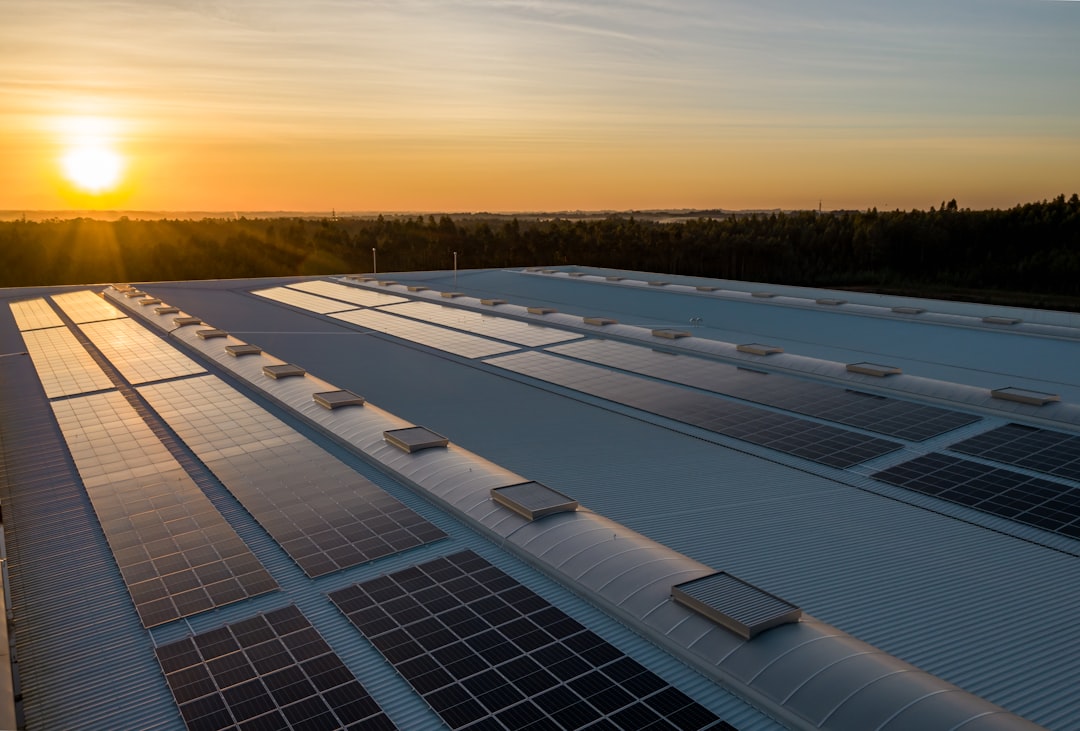 Photo: Nuno Marques / Unsplash
The Manufactured-Home Problem - and a Fix
The La Esperanza rooftop is the visible piece. The harder engineering problem is the one that has quietly kept solar out of reach for most Emma residents: manufactured homes.
Solar has long been out of reach for manufactured-home residents because of poor structural stability in the homes themselves. Standard racking systems require roof penetrations and load-bearing capacity that most manufactured homes cannot provide. Installers walk away. Residents stay on the grid.
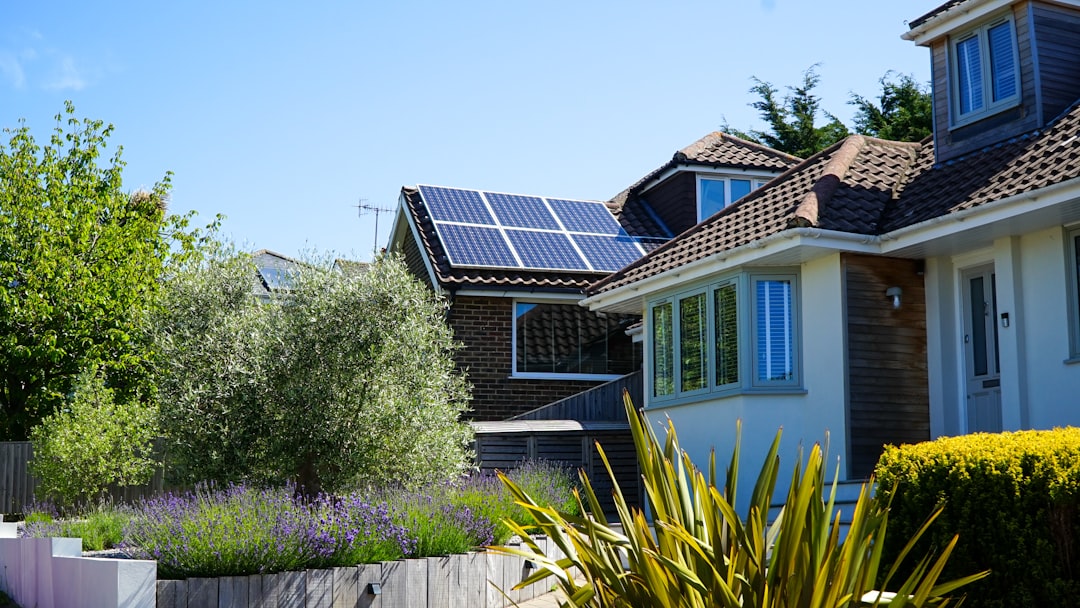
The workaround that Sugar Hollow Solar and PODER Emma tested this year is simple enough to describe but required real design work to execute: attach a custom-made porch to the manufactured home and install solar panels on the porch roof. Sugar Hollow and PODER tested the concept early this year, installing 15 panels on a porch built for a manufactured home in Emma, backed up by a Tesla Powerwall 3 battery. The system goes to the household at no cost, covered by Footprint Project contributions and Sugar Hollow's Repower WNC initiative.
Fifteen panels on a porch is not a large system - call it roughly 5-6 kW nameplate depending on panel spec, enough to cover essential loads and keep the battery topped up. But the point is not the kilowatts. The point is the proof of concept. If the porch-mount approach can be standardized and permitted reliably, it opens rooftop solar to a housing stock that has been structurally excluded from the market.
The porch-mount approach requires a custom structural design for each home, but the core concept — decoupling the solar racking from the manufactured home's roof — could be adapted by installers in other markets where manufactured housing is prevalent. The key question is whether local permitting authorities will treat the porch as a separate structure, which affects both cost and timeline.
What the Mobile Charging Stations Proved
Before any of the permanent hardware went in, Emma's recovery ran on mobile solar. Following Hurricane Helene, mobile solar-powered charging stations were vital for the neighborhood's recovery, leading to increased interest in solar energy in the community. A solar trailer now serves as a mobile outlet and tool-charging station for PODER's home repair crew - a durable piece of equipment that came out of the disaster response and stayed.
That continuity from emergency response to permanent infrastructure is exactly what the Footprint Project has been trying to engineer at scale. The New Orleans-based nonprofit arrived in western North Carolina after Helene with mobile renewable power units and has since built a permanent presence in the region. By February 2025, Footprint had hired staff to work in the area permanently, operating from a base in Mars Hill, a small town about 20 miles north of Asheville. It also launched the WNC Free Store, which provides long-term, no-cost rentals of solar and storage equipment to organizations still in need of reliable power.
The State-Level Program That Could Scale This
The Emma installations are small and community-funded. The program that could take the underlying logic statewide is a different animal - and it has a real appropriation behind it.
In August 2025, the North Carolina Department of Environmental Quality committed $5 million - drawn from federal Infrastructure Investment and Jobs Act funding - to install up to 24 permanent solar-plus-battery microgrids across six Helene-affected counties, plus two mobile "Beehive" microgrid hubs for statewide deployment. The six counties are Avery, Buncombe, Madison, Mitchell, Rutherford, and Yancey. The project is led by the Land of Sky Regional Council, the NC Sustainable Energy Association, and Footprint Project.
Site selection began in fall 2025, with project completion anticipated by June 2027. The grant covers full installation costs - no matching funds required from host organizations, which is the only way fire stations and food banks can realistically participate.
The mobile Beehive hubs are worth understanding on their own terms. The trailer-based units come in several forms - "cooler bees" for food and medicine storage, "power bees" for device charging, and "water bees" for filtering drinking water - and can deliver as much as 100 kilowatt-hours of energy, enough to operate a large building for up to 10 hours. They are designed to be dispatched rapidly when the next storm hits, not to sit in a parking lot.
Of the five stationary microgrids planned for western North Carolina, four are expected to cost more than $100,000. That price point is why the state grant is doing the work - and why the Emma neighborhood's community-funded approach, which assembled the same outcome from donations, sub-grants, and a recoverable grant, is genuinely notable as an alternative model for communities that cannot wait for a state program.
What Gets Built and What Doesn't
The honest read on Emma's solar build-out is that it is small, slow, and dependent on a patchwork of donors, sub-grants, and a single local installer that itself survived a million-dollar inventory loss. That is not a criticism - it is a description of what community energy resilience actually looks like when it is not backed by a utility or a large developer.
The La Esperanza array is commissioned and generating. The porch-mount pilot has been installed and is operating. The Repower WNC Fund has the financing structure to do more installations, though the $40,000 raised so far limits how many households it can reach. The state microgrid program has the grant, has named its counties, and has a June 2027 completion target - but the permanent installations are not yet in the ground.
What the Emma work demonstrates is that the structural barriers to solar in low-income and manufactured-housing communities are real but not insurmountable. The porch-mount concept is a hardware solution to a hardware problem. The Repower WNC Fund is a financing solution to a capital-access problem. Neither required a policy change or a new technology. They required someone to decide the problem was worth solving.
The question now is whether the approach travels. State officials and local partners have said they hope the western North Carolina microgrid program can serve as a model for broader statewide and national adoption. The Emma installations are smaller and less visible, but they are solving a problem - solar access for manufactured-home residents - that exists in every state with significant manufactured-housing stock. That is a much larger market than one neighborhood in Asheville.
What is the Repower WNC Fund and who can access it?
The Repower WNC Fund is a Sugar Hollow Solar initiative, run in partnership with the Earthshine Nature Community Assistance Program, that channels donations toward free solar installations for nonprofits and community organizations in western North Carolina impacted by Hurricane Helene. It is not a loan program — installations go to qualifying organizations at no cost.
Why can't manufactured homes typically host rooftop solar?
Most manufactured homes lack the structural load-bearing capacity and roof integrity required for standard solar racking systems, which penetrate the roof and transfer panel weight and wind loads to the structure. The porch-mount workaround developed by Sugar Hollow Solar and PODER Emma sidesteps this by attaching a separate structure to the home and mounting panels on the porch roof instead.
What is the timeline for the North Carolina state microgrid program?
The NC Department of Environmental Quality committed $5 million to the program in August 2025. Site selection began in fall 2025, and project completion is targeted for June 2027. The program will install up to 24 permanent microgrids across six counties plus two mobile Beehive hubs.
What is a Beehive microgrid hub?
A Beehive is a mobile resilience hub — essentially a trailer-mounted solar-plus-battery system — that can be rapidly deployed to communities after a disaster. The trailer-based units include 'power bees' for device charging, 'cooler bees' for food and medicine refrigeration, and 'water bees' for drinking water filtration. Each unit can deliver up to 100 kWh of energy.