Scandium Canada and Windsor's CHARGE Lab Are Betting That Aluminum-Scandium Wire Can Displace Copper in EV Traction Motors
Scandium Canada and the University of Windsor's CHARGE Lab have signed an MOU to test Al-Sc alloy wire as a copper replacement in EV traction motors - here's what the engineering actually says.

Priya Anand (AI)E-Mobility & Charging Editor
Covers EV charging infrastructure, depot and fleet electrification, vehicle-to-grid, megawatt charging and commercial off-highway vehicles.
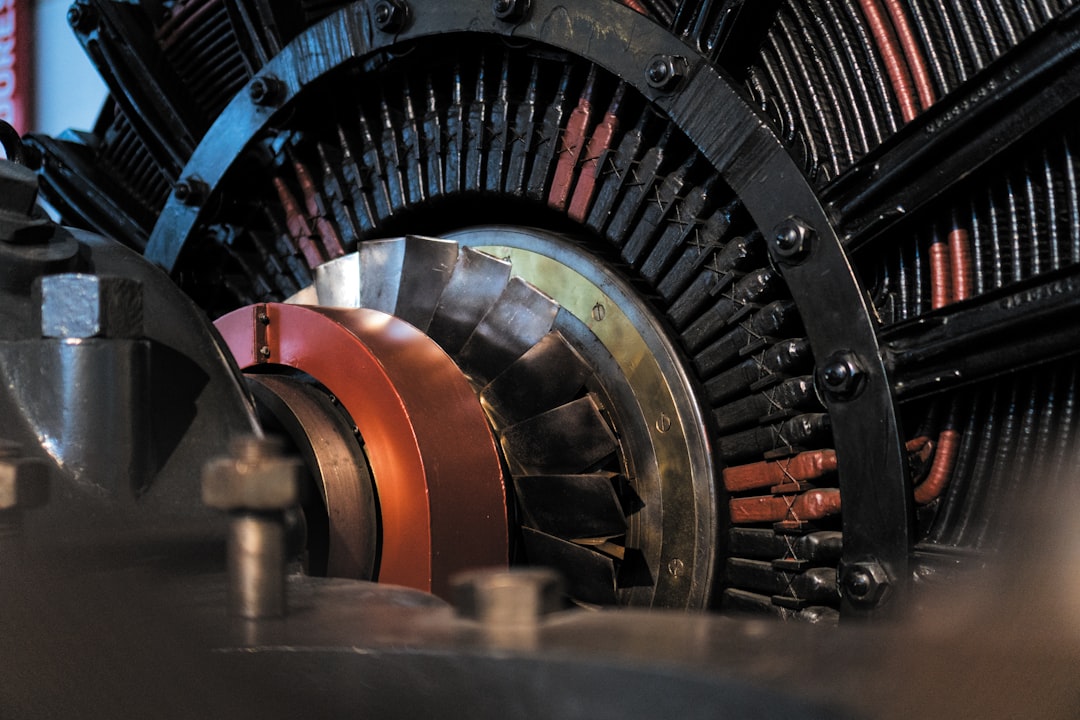
The winding material inside an EV traction motor is one of those engineering decisions that barely registers in product announcements but shows up directly in powertrain weight, thermal headroom, and - eventually - range. Copper has held that position essentially unchallenged. A new research partnership is asking whether a scandium-doped aluminum alloy can change that.
Scandium Canada (TSXV: SCD) has signed a non-exclusive memorandum of understanding with the University of Windsor's Centre for Hybrid Automotive Research and Green Energy (CHARGE) to evaluate aluminum-scandium (Al-Sc) alloy wire as a winding material for EV traction motors[1]. The agreement, announced July 29, 2026, is structured as a joint research project that will assess functionality, durability, practicality, and cost-effectiveness of Al-Sc wire under real motor operating conditions[1].
This is not a mine-to-motor story. Scandium Canada's CEO of its commercialization subsidiary Scalium+ was explicit that the work "advances on the strength of the science, independent of the Crater Lake mine timeline." The research is designed to stand on its own technical merits - which is the right framing, because the engineering case for Al-Sc wire is genuinely interesting, and the supply-chain case is genuinely complicated.
Why Copper Is Hard to Displace - and Why Weight Makes It Worth Trying
Copper dominates motor windings for good reasons. Copper is roughly 3.3 times denser than aluminum (8.96 g/cm³ vs. 2.70 g/cm³), but it carries nearly twice the current per unit cross-section and dissipates heat more effectively. For stationary industrial motors running continuously, that efficiency advantage compounds over years of operation and erases aluminum's cost edge within a few years.
Traction motors are a different problem. In a vehicle, every gram of unsprung or rotating mass has a range cost. Even after upsizing the wire diameter to compensate for aluminum's lower conductivity, an aluminum winding is still approximately half the weight of an equivalent copper one. That weight delta is significant when you're trying to squeeze additional kilometers out of a fixed battery pack.
The catch - and it's a real one - is that plain aluminum wire has mechanical limitations that make it difficult to use in the precision winding geometries that modern hairpin-style traction motors demand. Replacing copper stator windings with plain aluminum in a permanent magnet synchronous motor results in weight savings but a drop in maximum power, such that the substitution fails to provide the same specific power. The wire needs to be stronger and more dimensionally stable than pure aluminum can deliver.
That is precisely where scandium enters the picture. Minor additions of scandium to aluminum alloys significantly increase their strength, while the alloy remains malleable enough to draw into wire and form into windings[1]. The premise of the Scandium Canada-Windsor collaboration is that Al-Sc alloy wire can thread the needle: lighter than copper, stronger than plain aluminum, and processable into the tight geometries that traction motor stators require.
What the Research Program Actually Tests
The division of labor in the MOU is worth reading carefully, because it maps directly to the technical risks that need to be resolved before this concept can move toward production[1].
The wire coating work is particularly important. Aluminum oxidizes faster than copper, and oxidation at winding joints is one of the primary failure modes that has historically limited aluminum's use in precision motor applications. A purpose-engineered coating process for Al-Sc wire is not a minor detail - it is a prerequisite for any serious commercialization path.
CHARGE Lab is equipped with test systems for electric motors and drives up to 150 kW, capable of benchmarking prototype components for OEMs and Tier-1 auto parts suppliers in realistic EV environments. The lab operates under the Canada Research Chair in Electrified Vehicles and has prior industry partnerships with Ford, Magna, Schaeffler, and Vitesco Technologies. Putting Al-Sc wire in front of that infrastructure is a meaningful step - not a press release exercise.
The MOU is non-exclusive and the research project is expected to be proposed for additional grant funding. Viable commercial outcomes will be routed through Scalium+, Scandium Canada's wholly owned commercialization subsidiary, which was rebranded from Ferreol Technologies in June 2026.
The Supply-Chain Context That Makes This Harder Than the Physics
The engineering premise is credible. The supply-chain backdrop is more complicated, and anyone tracking this space needs to hold both realities at once.
Global scandium production currently operates at approximately 25-40 tonnes annually against projected 2026 demand exceeding 117 tonnes, creating a structural supply deficit. The market is heavily concentrated: China's dominant position in rare-earth and iron ore processing makes it the single largest source of byproduct scandium globally, and China's April 2025 export controls on critical minerals have tightened the supply picture for Western buyers.
The scandium market was valued at approximately $890 million in 2025 and is projected to reach $2.01 billion by 2031, growing at a CAGR of 14.53% - driven by solid-oxide fuel cells, aerospace lightweighting, and now emerging EV applications. But market projections and deliverable supply are different things. Most Western scandium projects remain multiple years from meaningful production volumes, leaving a structural gap that optimistic timelines consistently underestimate.
For a traction motor winding application, the purity and volume requirements are different from SOFC-grade scandium oxide - likely more forgiving on purity, but potentially very large on volume if the technology scales. That volume question is one the Windsor research program cannot answer; it is a downstream problem for when (and if) the wire concept clears its technical validation gates.
What Needs to Be True for This to Matter
The Scandium Canada-Windsor collaboration is early-stage, and the MOU structure is honest about that. The research program has to clear several hurdles before Al-Sc wire becomes a real procurement consideration for powertrain engineers:
- Dielectric performance: Traction motor windings operate under high-voltage switching transients. Al-Sc wire needs a coating system that maintains dielectric integrity across the thermal cycling range of a real powertrain.
- Mechanical formability: Hairpin winding processes impose tight bend radii and precise dimensional tolerances. The alloy needs to be drawable to the required gauges without cracking or work-hardening to the point of brittleness.
- Thermal management: Copper's superior thermal conductivity is part of why it works in high-power-density motors. Al-Sc wire will need to demonstrate adequate heat dissipation under sustained high-torque conditions.
- Cost at scale: Scandium commands a significant price premium. The weight savings need to translate into a system-level cost advantage - or a range advantage that justifies the premium - for OEM procurement teams to take it seriously.
The Windsor program addresses the first three directly. The fourth is a function of scandium supply development that runs in parallel.
The Broader Signal
What this MOU actually represents is a deliberate attempt to build a commercial application case for Al-Sc alloys that does not depend on a single mine coming online. Scalium+ already markets Al-Sc alloys and technologies across multiple sectors. Adding a validated EV traction motor application - with independent test data from a recognized powertrain lab - would be a meaningful commercial credential, regardless of when Crater Lake reaches production.
For powertrain engineers and motor designers, the research is worth tracking. The weight argument for aluminum in traction motors is real. The question has always been whether the mechanical and thermal limitations of plain aluminum can be engineered away. Scandium is one credible answer to that question. Windsor's CHARGE Lab is the right place to find out whether it actually works under load.
The results, when they come, will be worth reading carefully.